• Check the roof early in spring: Look for missing shingles, cracked flashing, clogged gutters, and attic moisture before small issues turn into leaks. A fast inspection now can help protect your home from costly damage later.
• Use a simple step-by-step process: Start from the ground, move to the attic, clear debris, and note any wear or water signs. Following a clear checklist makes it easier to catch problems that are easy to miss.
• Avoid common DIY mistakes: Skipping the attic, ignoring gutters, and forgetting to write down damage can lead to bigger repairs. A careful inspection helps you stay ahead of roof trouble and keep your home protected.
Why Early Spring Roof Checks Matter
Spring in Lake St. Louis can bring cold nights, wet weather, and sudden temperature swings that put stress on a roof. Small issues that formed during winter can turn into leaks, loose shingles, or hidden water damage fast. A roof inspection checklist for early spring helps us catch trouble before it becomes a bigger repair.
Many roof problems start out small and easy to miss from the ground. By the time water stains show up inside, the damage may already be spreading in the attic or under the decking. That is why a quick early-season check matters for every home, especially after months of snow, ice, and wind.
We also know that spring roof care is easier when we stay ahead of the season instead of reacting after a leak. A careful look now can help protect your home, your comfort, and your budget later. If you want help from a local team, our roofing services are here when you need them.
What to Look for Before Problems Spread
The best time to check a roof is when the weather first begins to warm up and the snow has cleared away. We look for missing shingles, lifted edges, cracked flashing, and clogged gutters because these are common spots where water gets in. Even a small opening can let moisture reach the layers below and cause damage over time.
Inside the home, we also check the attic for dark spots, damp insulation, and musty smells. These signs often point to a roof issue that may not be visible from outside. If you catch them early, repairs are usually simpler and less costly than waiting until the next storm.
Step-by-Step Roof Inspection Checklist for Early Spring
🧰 Step 1: Gather the Right Tools
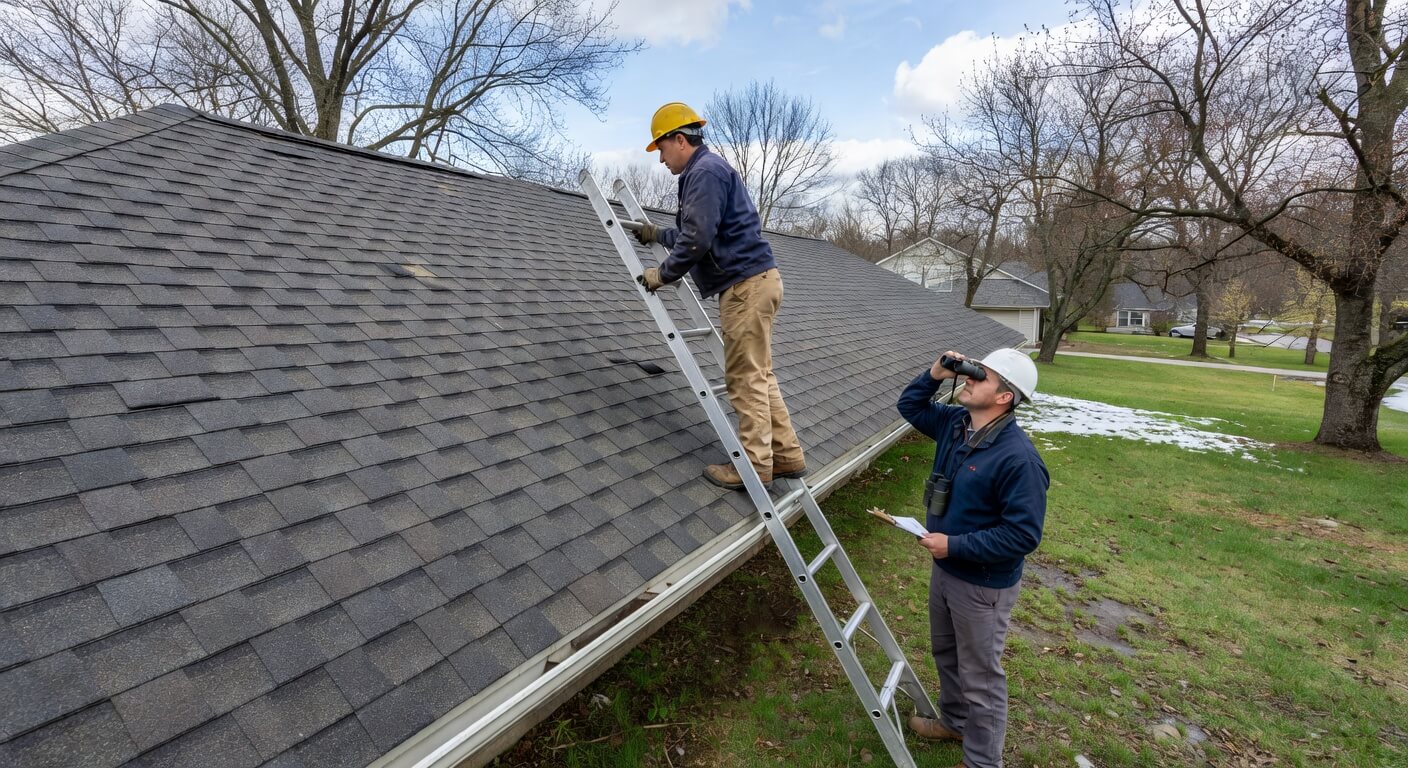
Use a pair of binoculars, a flashlight, gloves, and a notepad before you begin. These simple tools help us inspect safely and record anything that needs attention.
👀 Step 2: Check the Roof from the Ground
Start by looking at the roof from outside the home instead of climbing right away. We watch for missing shingles, sagging areas, and debris buildup because these can signal damage after winter weather.
🪜 Step 3: Inspect the Edges and Flashing
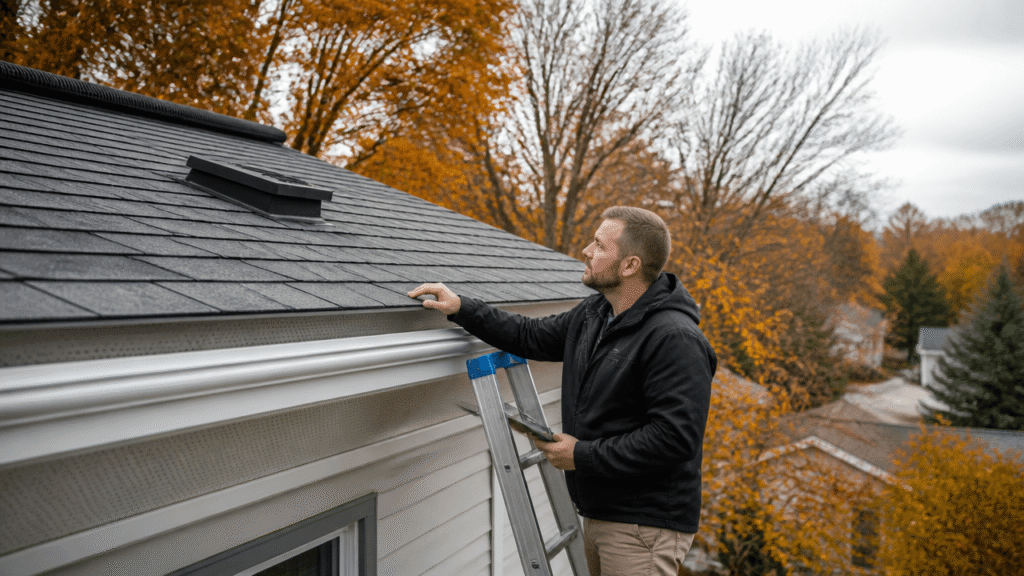
Pay close attention to roof edges, vents, chimneys, and skylights. Flashing in these areas helps keep water out, so cracks, gaps, or rust can lead to leaks.
🌧️ Step 4: Look for Signs of Water Entry
Check the attic, ceilings, and upper walls for stains, damp spots, or peeling paint. These are often the first clues that water has made its way past the roof surface.
🧹 Step 5: Clean Off Debris
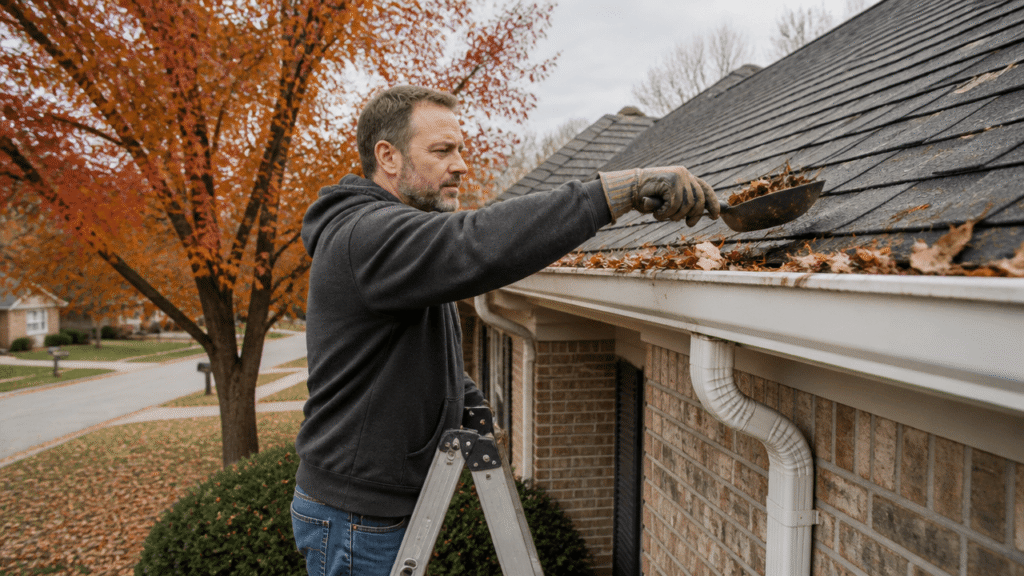
Remove leaves, sticks, and other buildup from the roof surface and valleys if it is safe to do so. Debris can hold moisture and block water from moving off the roof the way it should.
🚿 Step 6: Clear the Gutters and Downspouts
Make sure gutters and downspouts are open and draining properly. When they are clogged, water can back up and spill near the roof edge, which raises the chance of damage.
🔍 Step 7: Check for Shingle Wear
Look for curled, cracked, or missing shingles, as well as areas where granules have worn away. These signs mean the roof may be losing its ability to protect the home from rain and wind.
📋 Step 8: Note What Needs Repair
Write down any issues you see so nothing gets forgotten later. This helps us decide what needs quick attention and what may require a professional inspection.
Common Mistakes to Avoid During a Roof Check
A spring roof check works best when it is done carefully and in the right order. Many DIY mistakes happen because people rush, skip key areas, or only look at the roof from one angle. Knowing what to avoid helps us catch problems early and stay safe while doing it.
- ⚠️ Mistake 1: Only Checking the Roof from the Ground
This happens when people think a quick glance is enough. It can hide issues around flashing, valleys, and shingle edges that are easier to miss from below. To prevent this, inspect both the ground view and the attic so you can spot more than one type of warning sign. - ❌ Mistake 2: Forgetting the Attic
This mistake is common because many people focus only on the roof surface. The attic often shows water damage before the ceiling does, so skipping it can delay needed repairs. To prevent this, always look for stains, damp insulation, and unusual smells inside the attic. - 🚫 Mistake 3: Ignoring Gutters and Downspouts
People often treat gutter cleaning as separate from roof care, even though they work together. When gutters clog, water can back up under the roof edge and lead to damage. To prevent this, check drainage at the same time you inspect the roof. - ⚠️ Mistake 4: Missing Small Shingle Problems
This usually happens when people only look for obvious damage like missing shingles. Small cracks, curls, or worn granules may not stand out right away, but they can still let water in. To prevent this, scan the roof closely for surface wear as part of the inspection. - ❌ Mistake 5: Writing Nothing Down
People sometimes see a problem and think they will remember it later. That often leads to forgotten repairs and repeat damage after the next storm. To prevent this, keep a simple list of what you find during the inspection.
Frequently Asked Questions
What should be on a roof inspection checklist for early spring?
A roof inspection checklist for early spring should include shingles, flashing, gutters, attic signs of moisture, and roof edges. It should also cover debris removal and a quick look at drainage so hidden damage does not get missed.
How often should a roof be checked in spring?
A roof should be checked at least once in early spring and again after any major storm. This helps catch small damage before rain and wind make it worse.
Can I do a roof inspection myself?
Yes, you can do a basic roof inspection yourself from the ground and inside the attic. You should avoid walking on the roof unless you are trained and have the right safety gear.
What are the first signs of roof damage in spring?
The first signs are often missing shingles, water stains, damp attic insulation, and clogged gutters. A roof inspection checklist for early spring helps us spot these warning signs before they turn into leaks.
Why is early spring the best time for roof checks?
Early spring is the best time because winter damage often shows up once the weather starts changing. Checking the roof then gives us a chance to fix problems before heavy spring rain arrives.
Wrapping Up Your Spring Roof Check
A careful early-season inspection can help protect your home from leaks, moisture, and costly damage. By following a roof inspection checklist for early spring, we can spot trouble early and keep the roof ready for the months ahead.
If you live in Lake St. Louis, MO, spring is the right time to pay close attention to your roof and gutters. We are always here to help keep your home protected, and you can also follow us on social media for more updates from Shamrock Roofing.