• Choosing the right siding material can affect how well your home holds up in Kansas City weather, how much upkeep it needs, and how much you spend over time.
• This guide compares common siding options like vinyl, fiber cement, and wood so you can see which one fits your home, budget, and long-term goals.
• You’ll also get practical tips on signs of damage, moisture protection, and when it may be time to replace your siding before bigger problems start.
Why Siding Choices Matter in Kansas City
In Kansas City, summer heat can make weak siding show its age fast. When the outside of a home starts to fail, small problems can turn into bigger repair bills. That is why siding replacement materials compared is a smart topic to review before making a choice.
Different siding types hold up in different ways against heat, rain, and wind. Some options are easier to care for, while others may last longer or offer better curb appeal. If you wait too long, you may end up paying more for repairs than you would for a planned upgrade from our siding services.
Homeowners often focus on style first, but that is only part of the decision. The right material should fit the home, the weather, and the budget all at once. When we help people look at siding replacement materials compared, we keep all three of those things in mind.
What Smart Homeowners Should Compare
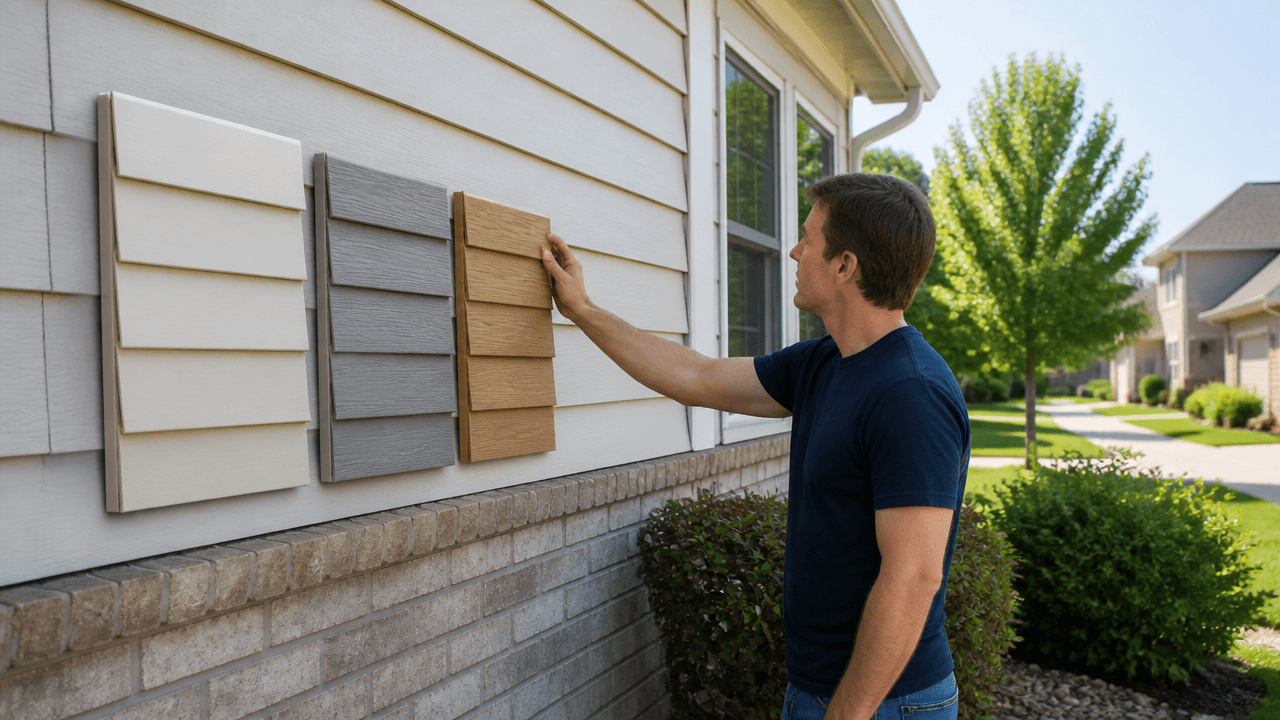
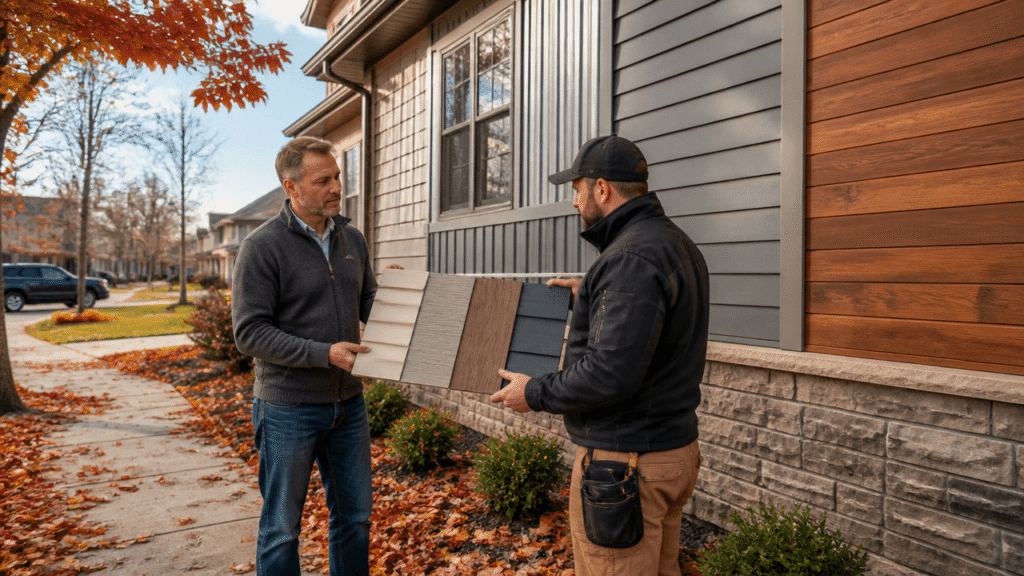
Vinyl siding is popular because it is light, simple to care for, and often more budget-friendly than many other options. Fiber cement is known for holding up well in tough weather and can give a home a strong, clean look. Wood siding has a classic feel, but it usually needs more upkeep to stay in good shape over time.
We always remind homeowners that the best choice is not only about the upfront price. It also matters how often the material needs care, how long it may last, and how well it fits the home’s style. When looking at siding replacement materials compared, those details can make a big difference in long-term value.
Kansas City weather can be hard on exterior surfaces, especially during hot months followed by sudden storms. That makes it important to choose a material that can handle shifting conditions and still protect the home. If a siding system is already showing cracks, warping, or loose panels, it may be time to act before more damage sets in.
Tips From The Pros
🛠️ Tip 1: Match the material to the weather
Choose siding that can stand up to heat, rain, and wind common in Kansas City. Materials that resist moisture and hold their shape often perform better over time.
📋 Tip 2: Compare more than the price tag
A lower upfront cost does not always mean a better deal. Look at upkeep, expected lifespan, and repair needs before making a final call.
🔎 Tip 3: Watch for early warning signs
Cracks, swelling, fading, and loose panels can mean the siding is breaking down. Catching these signs early can help prevent larger repair issues.
🌡️ Tip 4: Think about summer sun exposure
Strong sun can cause some siding materials to fade or wear faster. In hot months, it helps to choose a product that keeps its color and shape well.
🏠 Tip 5: Keep curb appeal in the mix
The right siding should protect the home and still look good from the street. Color, texture, and panel style all affect how the finished home feels.
💧 Tip 6: Check how well it handles moisture
Siding should help keep water out, not hold it in. Materials that shed water well can lower the risk of rot and hidden damage.
📏 Tip 7: Ask how much care each option needs
Some siding types need regular painting or sealing, while others need less upkeep. A material that fits your schedule can save time and stress later.
🧰 Tip 8: Plan the project before damage spreads
If siding problems are already visible, waiting can make the work more involved. A timely replacement can protect the home and help avoid added repair costs.
Frequently Asked Questions
What are the best siding replacement materials compared for Kansas City homes?
The best choices are usually vinyl, fiber cement, and wood, depending on budget and maintenance needs. For Kansas City homes, fiber cement often stands out for durability, while vinyl is a practical choice for many homeowners.
Is vinyl siding a good option for summer weather?
Yes, vinyl siding can work well in summer weather when it is installed correctly. It is a common choice because it is affordable and low maintenance, though it is important to choose a product that handles heat well.
How do I know if my siding needs replacement?
Yes, visible damage is often the clearest sign that replacement may be needed. Cracks, warped panels, soft spots, and repeated moisture issues usually mean the siding is no longer protecting the home well.
Is fiber cement worth the higher cost?
Yes, fiber cement can be worth the cost for homeowners who want strong weather resistance and longer-term value. It often lasts longer than cheaper materials, which can help balance the upfront price.
Should I replace siding during summer in Kansas City?
Yes, summer can be a good time for siding replacement if the weather stays dry enough for the work. Warm conditions can help the project move along smoothly, but timing still depends on the condition of the home and the forecast.
Final Thoughts on Siding Materials
Choosing the right siding is about more than looks, because the material has to protect the home through changing weather and everyday wear. When we look at siding replacement materials compared, we focus on value, durability, and how well each option fits the home in Kansas City. That kind of careful choice can make the next step feel much easier and more confident.
If your siding is showing its age, now is a good time to compare your options and act before the damage grows. Our team at Shamrock Roofing is here to help you make a smart choice for your home and your budget. You can also follow us on social media for updates and home care tips.