• Act early to avoid bigger roof problems. Late-summer wear, storm damage, and blocked drains can quickly turn into leaks or interior damage once fall weather arrives. Commercial roof maintenance before fall helps catch small issues while they are still easier to fix.
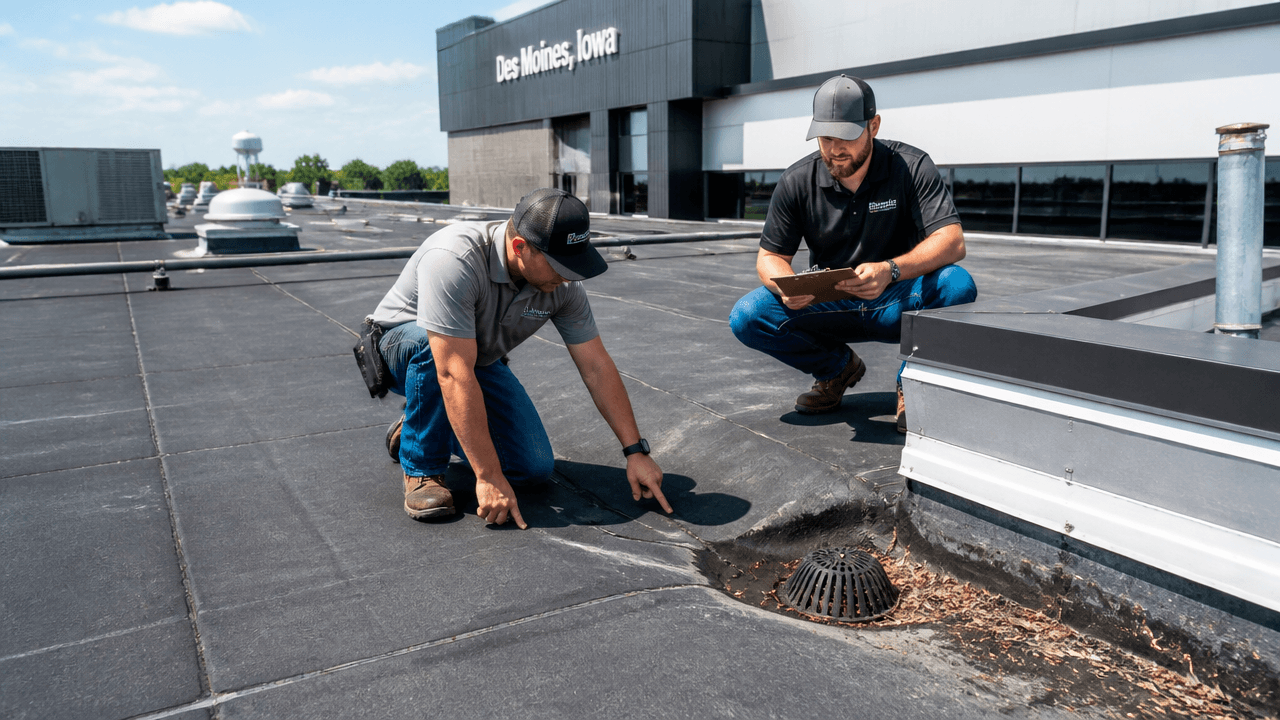
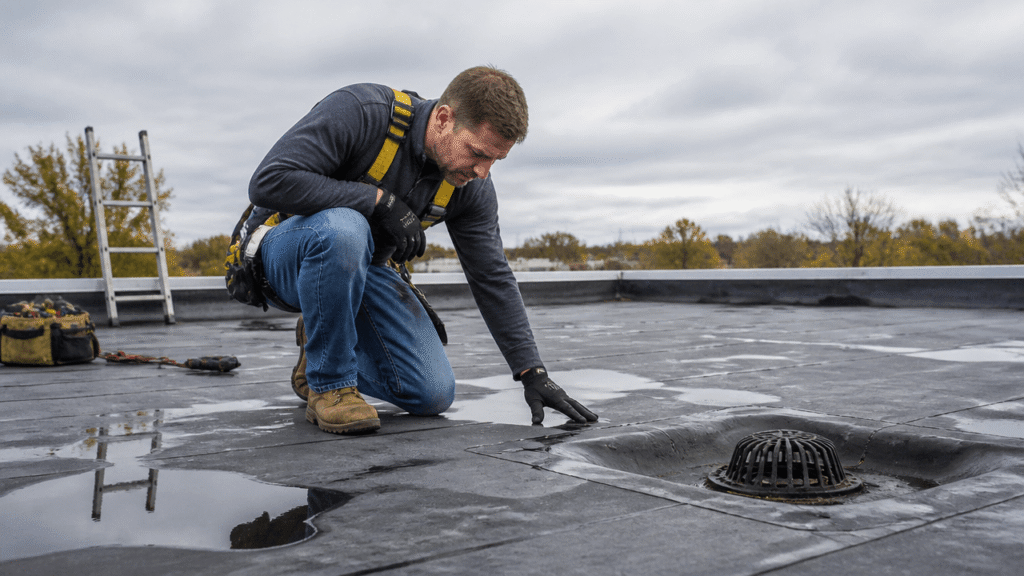
• Focus on the roof areas that fail first. Flashing, seams, drains, and areas with standing water are some of the most common trouble spots on a commercial roof. Checking these parts now can help protect your building from wind, rain, and moisture damage later.
• Use a simple maintenance plan to stay ahead. A roof inspection, debris removal, and a quick look at drainage can make a big difference before the season changes. For businesses in Des Moines, this kind of timely care helps keep the roof ready for fall weather.
Why August Is the Right Time to Act
August in Des Moines can still bring heat, storms, and long stretches of sun that wear on a commercial roof fast. Small issues that seem minor now can turn into leaks, ponding, or edge damage once fall weather starts moving in. That is why commercial roof maintenance before fall matters more than many property owners realize.
A roof that looks fine from the ground can still have loose flashing, blocked drains, or hidden damage from summer storms. When those problems sit too long, they often get worse as wind and rain pick up in the next season. We have seen how a short delay can lead to bigger repair needs later, which is why timing matters.
Taking action now gives your building a better chance to stay dry and protected when the weather changes. It also helps you catch trouble while repairs are still smaller and easier to handle. If you want to stay ahead of roof problems, our commercial roofing services can help you get started.
How Smart Maintenance Protects Your Building
A good maintenance plan focuses on the parts of the roof that take the most abuse, especially seams, drains, flashing, and membrane surfaces. These areas are often the first to show wear because they deal with water movement, sun exposure, and shifting temperatures. Regular checks in late summer help you find trouble before it turns into interior damage.
We also recommend paying close attention to debris, pooling water, and any places where seals look cracked or lifted. Even a small opening can let moisture in and affect insulation, ceiling tiles, and equipment below. For property owners in Des Moines, a set schedule for commercial roof maintenance before fall can make a real difference when the weather starts to turn.
Tips From the Pros
🔍 Tip 1: Inspect the roof after summer storms
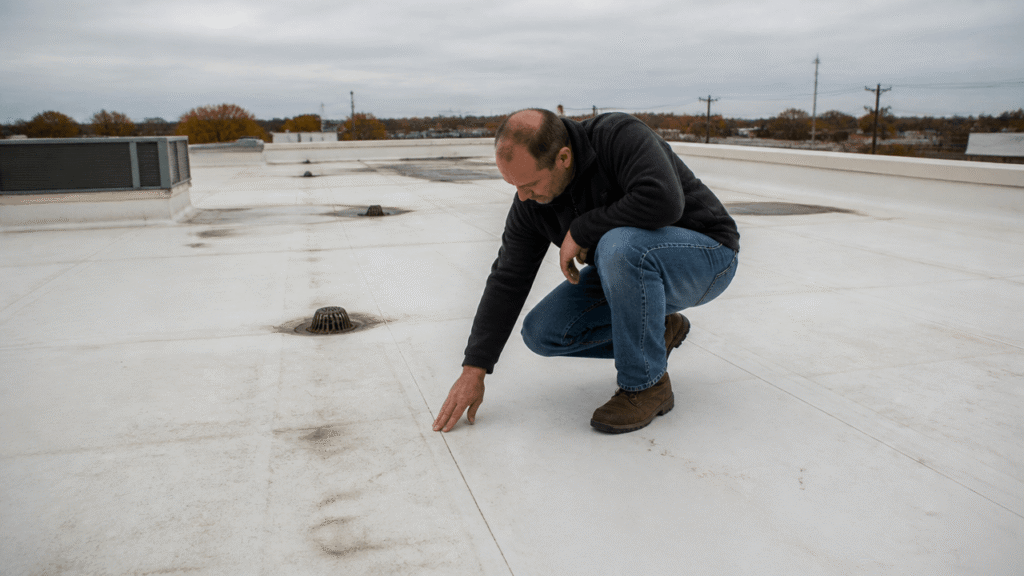
Storms can loosen flashing, lift edges, and leave behind hidden damage that is easy to miss from the ground. A careful inspection after heavy rain or wind helps catch small issues before they spread.
🧹 Tip 2: Clear debris from the roof surface
Leaves, sticks, and dirt can trap moisture and block water flow. Removing debris helps reduce wear and keeps drains and scuppers working the way they should.
🚿 Tip 3: Check drains and gutters for clogs
Water that cannot move off the roof may pool and strain the system. Clean drains and gutters help protect the roof from standing water and overflow damage.
🧱 Tip 4: Look closely at flashing and seams
Flashing and seams are common failure points because they handle movement and weather exposure. If they are cracked, loose, or peeling, moisture can get inside fast.
🌞 Tip 5: Watch for signs of sun wear
Late summer heat can dry out sealants and make roofing materials age faster. Brittle spots, faded areas, and surface cracks are signs the roof may need attention soon.
💧 Tip 6: Test for ponding water after rain
Water that stays on the roof for too long can weaken materials and raise the risk of leaks. If puddles keep showing up in the same places, the drainage system may need work.
📝 Tip 7: Keep a simple roof record
Write down what you see, when you saw it, and what was repaired. A clear record makes it easier to spot patterns and plan future maintenance before problems grow.
🛠️ Tip 8: Schedule service before fall weather hits
Late summer is the best time to handle roof care before cooler, wetter weather arrives. Planning ahead helps reduce the chance of surprise damage during the busy fall season.
Frequently Asked Questions
Why is commercial roof maintenance important before fall?
Yes, commercial roof maintenance before fall is important because it helps catch damage before colder, wetter weather arrives. Small roof issues can turn into leaks or interior damage once rain and wind become more common.
What should be checked during a commercial roof inspection?
Yes, a roof inspection should include drains, flashing, seams, membrane condition, and signs of pooling water. These areas often show the first signs of wear and can lead to bigger problems if ignored.
How often should a commercial roof be maintained?
Yes, a commercial roof should be checked at least twice a year and after major storms. Regular care helps spot wear early and keeps the roof working as it should.
Can summer heat damage a commercial roof?
Yes, summer heat can dry out sealants, stress materials, and make existing weak spots worse. That is one reason commercial roof maintenance before fall is such a smart move in Des Moines.
What are the warning signs of roof trouble?
Yes, warning signs include ponding water, loose flashing, cracked sealant, stains inside the building, and debris buildup. If you notice any of these, the roof should be checked soon to limit further damage.
Final Thoughts on Roof Care
Acting in late summer gives your building a better shot at staying protected through the fall season. A roof that gets attention now is less likely to surprise you with leaks, drainage problems, or storm-related damage later. That is why we always encourage property owners to treat maintenance as a priority, not a backup plan.
For businesses in Des Moines, staying ahead of roof issues is one of the simplest ways to protect your property and avoid avoidable repairs. A few careful steps now can save time, stress, and money when the weather shifts. To keep up with our latest updates, follow us on social media.