
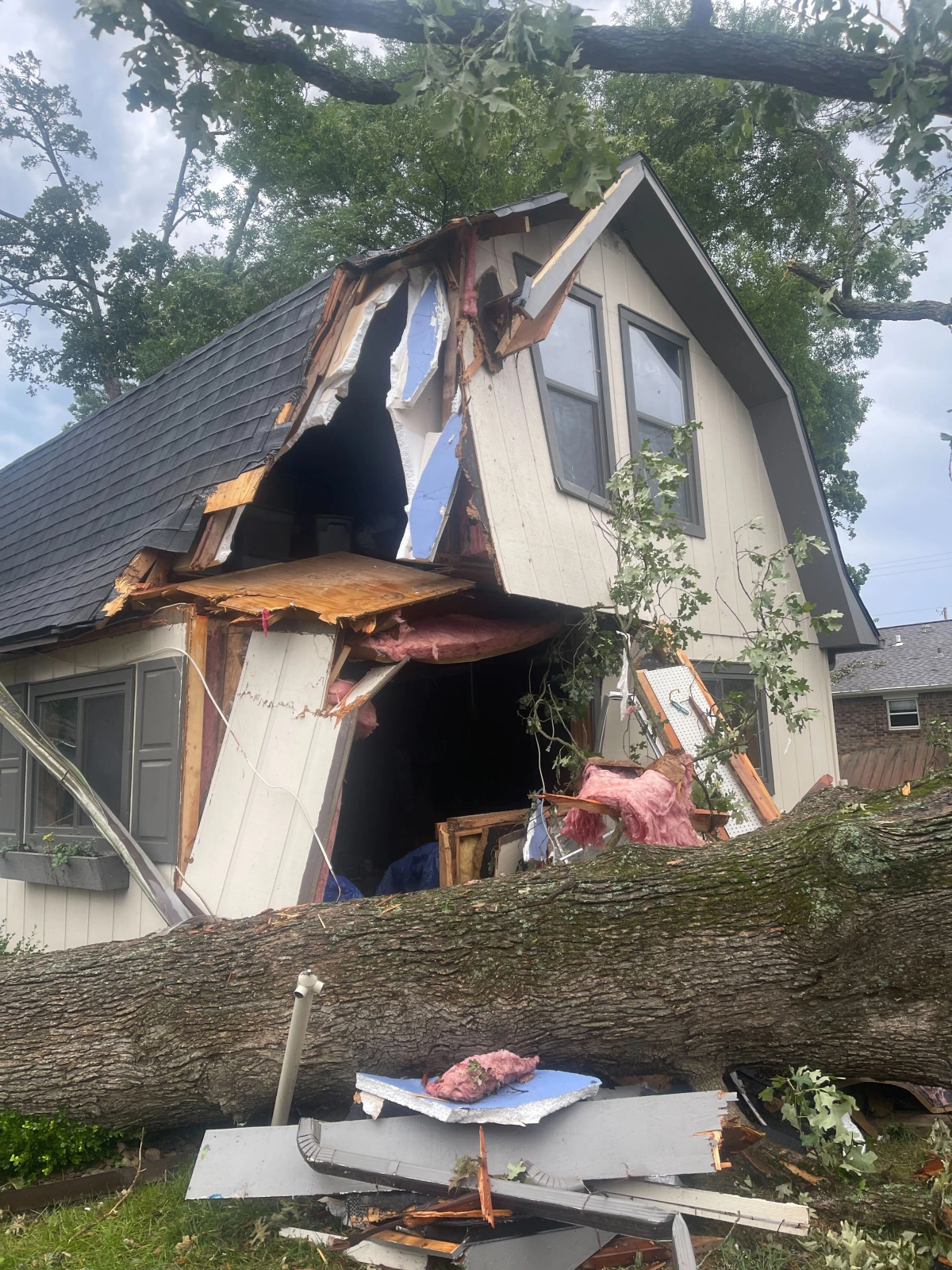
The Great Plains and Midwest see some of the highest hail rates in North America. Peak season runs April through September.
Working with a licensed, bonded contractor ensures workmanship warranties are enforceable and meet local building codes.
Most homeowner policies in MO, KS, and surrounding states require storm damage claims within 1–2 years of the event date.
A compromised roof in Kansas City or Omaha can develop interior water damage within 24–48 hours of a storm if left unaddressed.
Wind and hail often damage flashing, soffits, and underlayment that look intact from the ground but leak with the first rain.
Storm damage often disrupts soffit and ridge vents. Damaged ventilation leads to heat and moisture buildup that wears your roof faster.
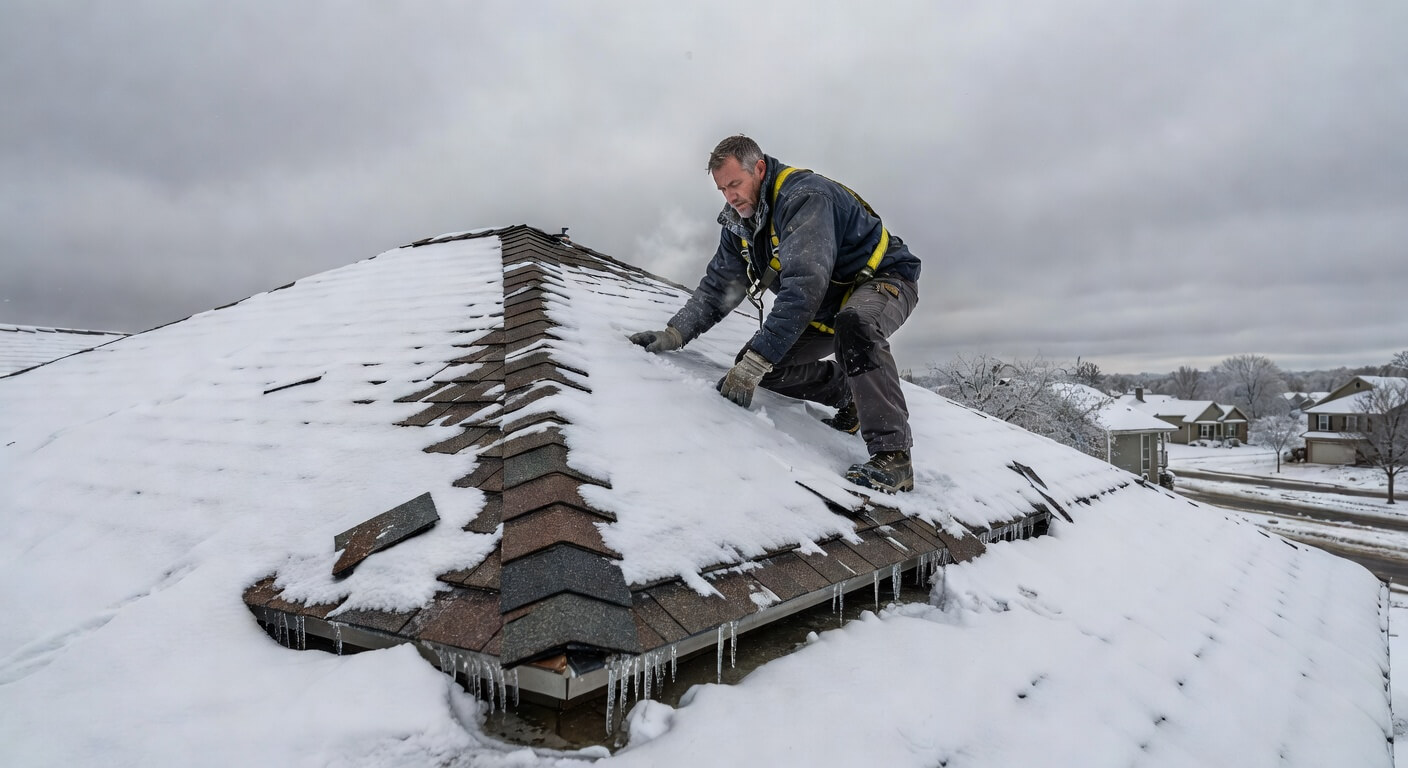
Inspect your gutters and downspouts—granule buildup after a storm is a reliable early indicator of shingle impact damage.
File a claim even if damage looks minor. Some hail dents accelerate shingle aging and void manufacturer warranties years later.
Request drone or aerial documentation from your contractor. Ground-level photos alone may not capture ridge, valley, or flashing damage.
Ask your contractor about ventilation inspection after storm repairs—missing or displaced ridge vents are often overlooked.
Check your attic after any major storm for daylight coming through the deck boards or new signs of moisture on insulation.
Avoid temporary repairs before documenting all damage. Take clear photos and videos first to preserve evidence for your insurance claim.