Updated: June 09,2026
After a storm, you climb up for a look or spot something off from the ground, and there it is: a patch of pockmarks and bare spots on your shingles. Is it hail damage from last week’s storm, or is it blistering that’s been building for months? They can look almost identical from a ladder, but the difference decides whether your insurance pays for a new roof or you’re covering it yourself.
This guide walks through the signs of each, how to tell them apart, and what to do next. Shamrock has inspected roofs across the storm-prone Midwest since 1977, so we see both of these every week.
Why the difference matters (especially for insurance)
Mistaking one for the other can cost you real money. Hail damage is sudden, storm-caused, and typically covered by homeowners insurance. Blistering is gradual and usually traced back to poor ventilation, aging, or installation, so insurers generally treat it as wear and tear that isn’t covered.
Call it hail when it’s really blistering and you risk a denied claim. Miss real hail damage and you could pay out of pocket for a roof your policy should have covered. Getting the diagnosis right is the whole game.
What hail damage looks like on a roof
Hailstones are balls of ice ranging from pea-size to baseball-size. When they hit asphalt shingles, they leave damage that’s sudden and scattered.
Signs of hail damage include:
- Bruised or dented shingles — circular dark spots or soft depressions you can feel with your hand
- Granule loss — bare patches where hail knocked off the protective surface, often with granules collecting in gutters and downspouts
- Cracked or split shingles — more common on older or brittle roofs
- Exposed underlayment or fiberglass mat — where the impact stripped the shingle layers
- Dents on soft metal — check gutters, downspouts, vents, and flashing; dents there confirm hail hit hard enough to damage shingles too
- A random, scattered pattern — hail doesn’t follow straight lines
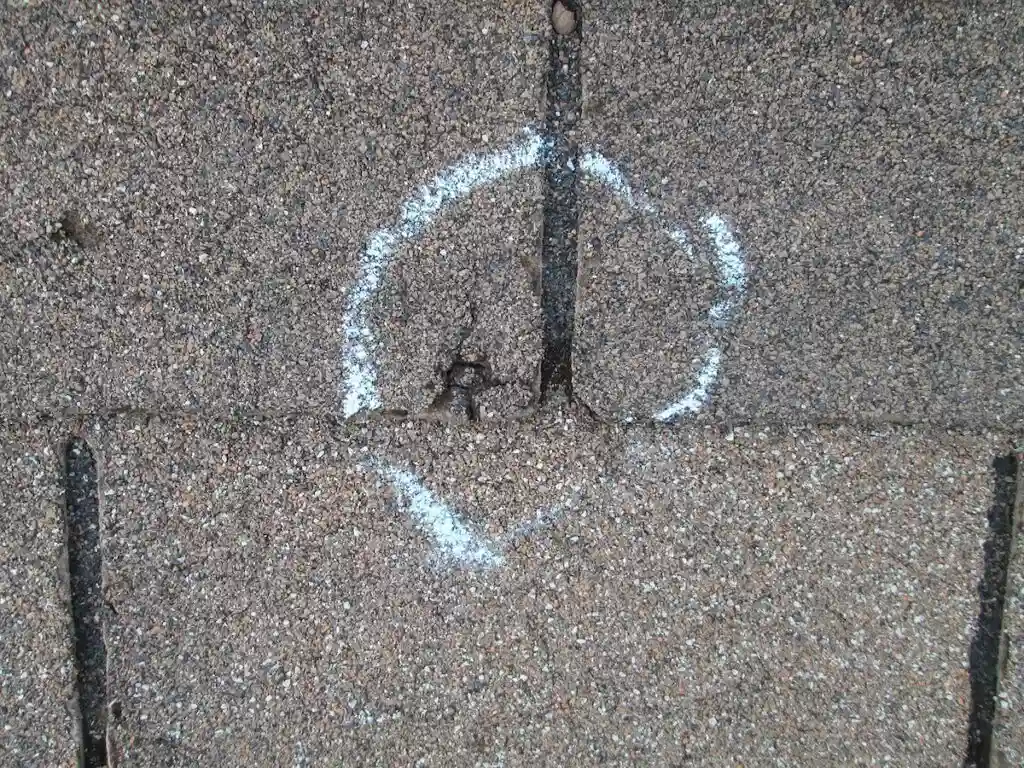
A short, intense storm can do all of this in minutes. If a storm just rolled through your area, treat any of these signs as a reason for a professional inspection.
What roof blistering looks like
Blistering can fool you because the end result, pockmarks and bare spots, resembles hail. But the cause is completely different. Roof blisters are small raised bubbles on shingles caused by trapped moisture or heat escaping from within or beneath the shingle. Over time the bubbles burst, leaving pockmarks that expose the mat.
Common causes of blistering:
- Poor attic ventilation — trapped heat cooks shingles from underneath
- Moisture in the shingle during manufacturing or from installation
- Aging shingles near the end of their lifespan
- Lower-quality materials more prone to bubbling
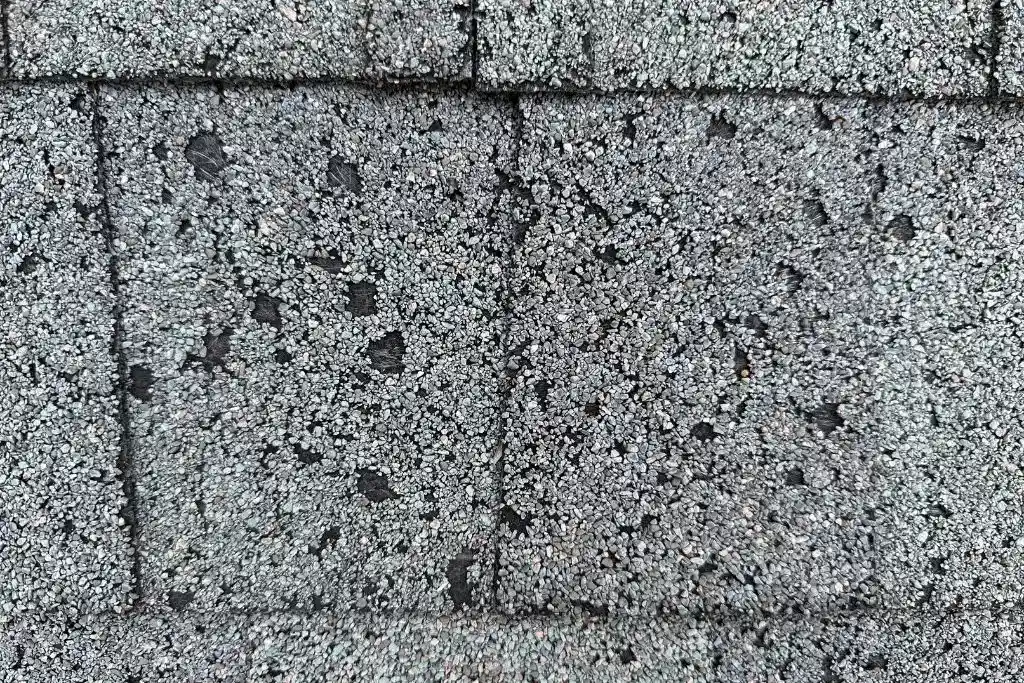
Close-up of blistered shingles showing raised bubbles and burst pockmarks.
The tell is timing and pattern: blistering shows up gradually, often concentrated on the hottest, most sun-exposed slopes, not scattered randomly like hail.
Hail damage vs blistering: side-by-side
| Feature | Hail Damage | Blistering |
| Cause | Impact from hailstones | Trapped moisture or heat |
| Timing | Sudden, right after a storm | Gradual, over months or years |
| Shape | Circular dents, bruises, splits | Raised bubbles, then pockmarks |
| Pattern | Random and widespread | Clustered on sun-facing slopes |
| Other clues | Dents on gutters, vents, flashing | Worst on hottest roof sections |
| Insurance | Typically covered | Usually considered wear and tear |
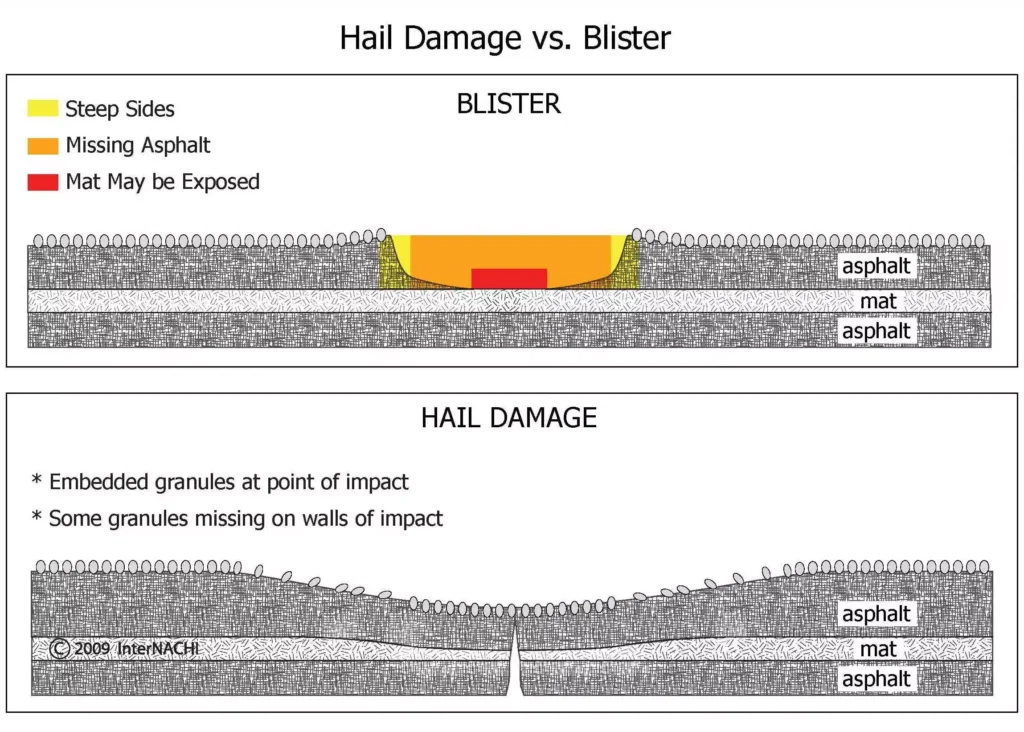
Hail damage vs blistering on a roof, side by side comparison.
How to tell the difference yourself (a quick check)
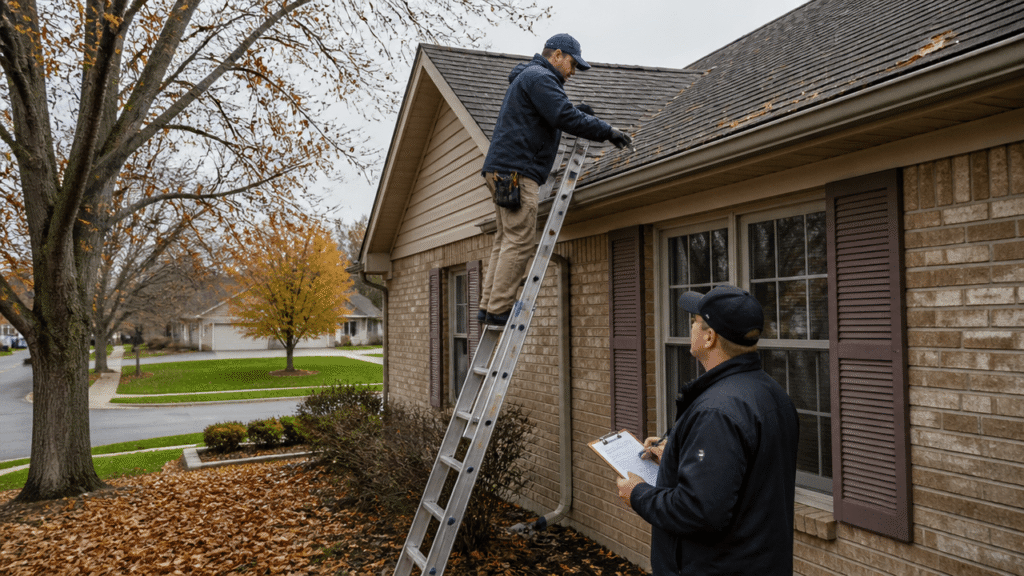
You can do a first-pass check from the ground or a stable ladder, no climbing on the roof:
- Think about timing. Did this appear right after a storm, or has it been creeping in for a while? Sudden points to hail; gradual points to blistering.
- Look at the pattern. Scattered all over equals hail. Concentrated on the south- and west-facing slopes equals likely blistering.
- Check the metal. Walk the perimeter and look at gutters, downspouts, and vent caps. Dents there are a strong hail signal.
- Look in the gutters. A pile of shingle granules after a storm suggests hail knocked them loose.
- Feel a shingle (if safe). Hail bruises feel soft or springy, like a bruise on fruit. Blisters feel like raised bubbles or leave a crater when popped.
When in doubt, don’t guess. The next section matters more than any DIY check.
What to do if you find roof damage
Whether it’s hail or blistering, a few steps protect both your roof and your wallet:
- Document everything with clear, dated photos from a safe vantage point.
- Check your insurance policy for storm and hail coverage and note your deadline to file, since many policies limit how long after a storm you can claim.
- Get a professional inspection to confirm the type and extent of damage before you file anything.
- Don’t attempt repairs yourself. DIY work can worsen the damage and may void your manufacturer warranty.
- Get an honest second opinion if a door-knocking “storm chaser” pressures you into a fast claim.
Shamrock provides free roof inspections, and we’ll tell you straight whether you’re looking at hail, blistering, or simple aging, and whether it’s worth a claim. If it is storm damage, our storm damage restoration team can document it properly and guide you through the insurance process. If repair is the better call, we handle roof repair too.
Why Midwest roofs are especially at risk
Across Shamrock’s markets, from Kansas City and Wichita to Denver, Tulsa, and Omaha, roofs take heavy seasonal punishment. Hail is one of the most frequent causes of property damage in this part of the country, and the same intense sun and rapid hot-to-cold temperature swings that age shingles also make blistering more likely. That combination is exactly why telling the two apart matters here more than almost anywhere else.
If you’re in a hail-prone area, regular inspections, especially after a big storm, are the cheapest insurance you can get.
Frequently asked questions
Is hail damage covered by homeowners insurance?
In most cases, yes. Hail is sudden storm damage, which standard homeowners policies typically cover. Blistering usually isn’t, because it’s considered wear and tear. Always confirm with your own policy.
Can you have hail damage and not know it?
Yes. Early hail damage often isn’t visible from the ground and may not leak right away. Left unaddressed, it shortens your roof’s life and can lead to leaks later, which is why a post-storm inspection is worth it.
How long do I have to file a hail damage claim?
It varies by insurer and state, but many policies have a filing window after the storm date. Check your policy and don’t wait, since delays can complicate a claim.
Does blistering mean I need a new roof?
Not always. Light blistering may be cosmetic, while widespread blistering on an aging roof can signal it’s near the end of its life. An inspection tells you which.
Need a roof inspection? Schedule a free one today
If you’ve spotted damage and aren’t sure whether it’s hail or blistering, let Shamrock take a look. You’ll get an honest assessment and clear next steps, no pressure. Call (913) 850-6556 or book your free inspection online.