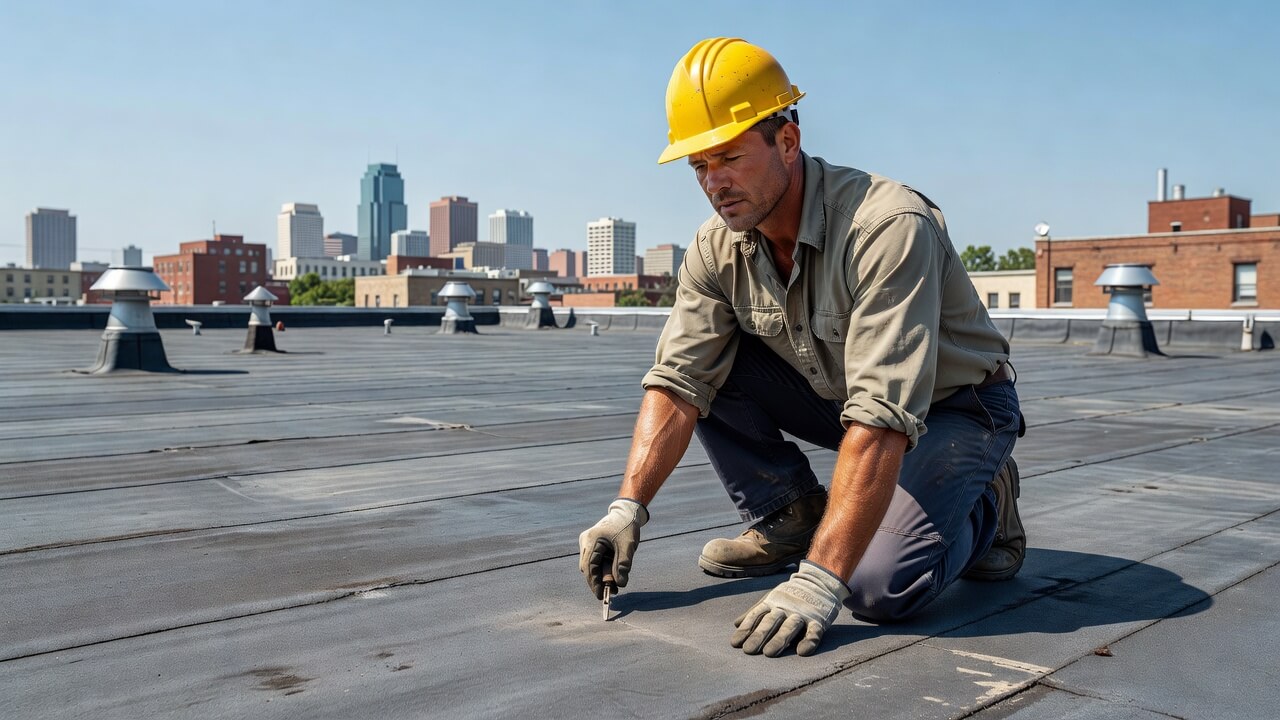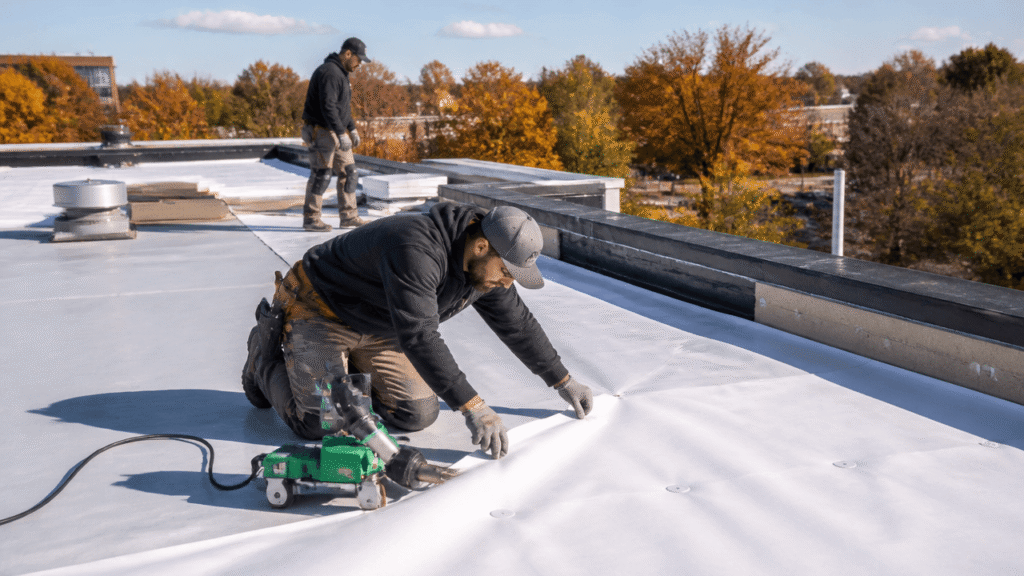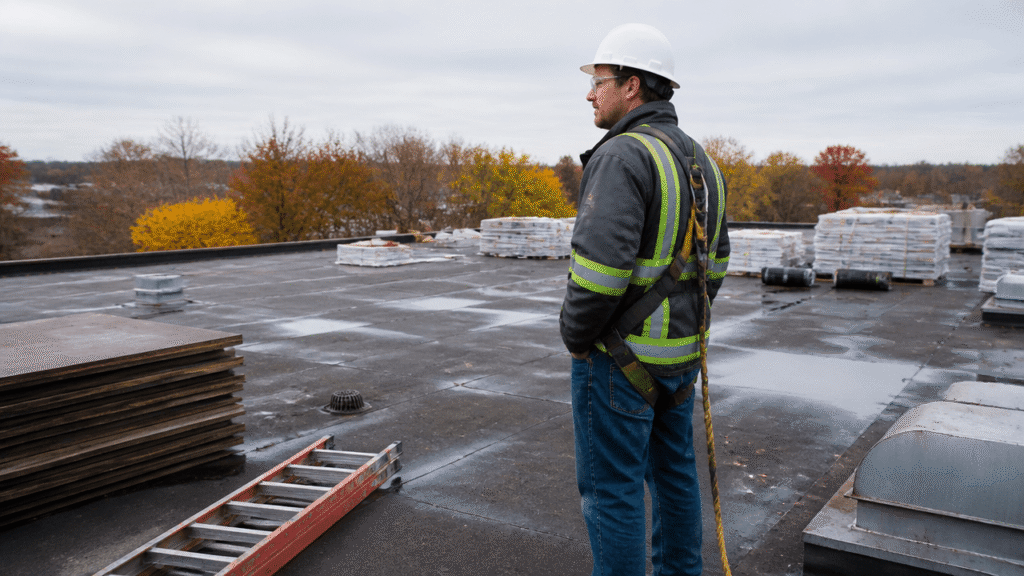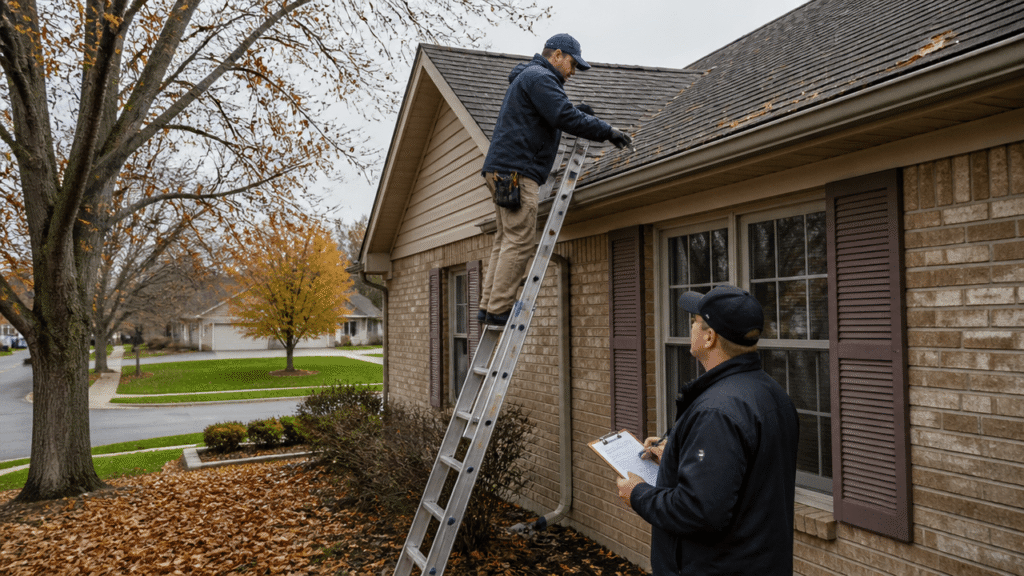
• Modified bitumen roofing is a smart fit for flat and low-slope roofs because it handles heat, moisture, and daily wear well. It is built to give property owners steady protection during Kansas City’s summer weather.
• Knowing the signs of roof wear early can help prevent leaks, surface damage, and costly repairs later on. Seams, edges, bubbling, and water stains are all warning signs that should not be ignored.
• Regular roof checks and timely replacement decisions can help extend the life of a commercial roof. A roof that matches the building type and weather conditions can save time, stress, and money over the long run.
Why Roof Choices Matter in Summer Heat
Summer in Kansas City can put steady stress on a roof, especially when the sun stays hot for long stretches. When a roof starts to struggle, small issues can turn into bigger repair costs fast. That is why we believe it helps to understand modified bitumen roofing benefits explained before warm weather pushes an aging roof too far.
Many property owners do not think about roof performance until they see signs like blistering, soft spots, or water intrusion after a storm. By then, the damage may already be spreading under the surface. For commercial buildings and flat roof systems, quick action matters, and you can learn more about our work through our commercial roofing services.
A strong roofing system should do more than cover a building. It should help handle heat, shed water, and stay dependable through changing weather. In a place like Kansas City, that kind of protection can make a real difference during the hottest months of the year.
What Makes This Roofing System a Smart Fit
Modified bitumen is built for low-slope and flat roof surfaces, which makes it a common choice for many business properties. It is made to stand up well against weather swings, and it can handle foot traffic better than some other roof coverings. That strength is one reason so many owners want modified bitumen roofing benefits explained in simple terms.
Another major reason people choose it is its layered design, which helps add extra protection against water. A well-installed system can help reduce the chance of leaks and early wear, especially when summer storms hit hard. We also often see property owners pair roof care with other building needs, which is why it is smart to look at related services like roof replacement when a system is past its best years.
Tips from the Pros
🌞 Tip 1: Check for heat wear early
Look for bubbling, cracking, or soft areas after long hot spells. These signs can show that the roof membrane is under stress from summer heat.
💧 Tip 2: Watch for water after storms
Even a small stain on the ceiling can point to a bigger roofing issue. Flat and low-slope roofs need fast attention when water starts to collect or slip through seams.
🔍 Tip 3: Inspect seams and edges often
Seams are one of the first places where roofing problems can start. If they open up or lift, moisture can work its way into the system faster than many owners expect.
🛠️ Tip 4: Keep the roof surface clear
Leaves, dirt, and loose debris can trap moisture and add stress to the roof. A clean surface helps the material do its job and makes small issues easier to spot.
📋 Tip 5: Schedule routine roof checks
Regular inspections help catch trouble before it grows into major damage. This is especially useful for buildings that rely on flat roofing through heavy summer weather.
🌡️ Tip 6: Plan for Kansas City heat
Strong sun and high temperatures can wear on roofing materials over time. Choosing a system that handles heat well can support better long-term performance.
🏢 Tip 7: Match the roof to the building type
Not every roof product is right for every structure. Modified bitumen is often a smart fit for commercial buildings with flat or low-slope roofs.
⚠️ Tip 8: Replace aging materials before failure starts
Old roofing can lose flexibility and protection as it ages. Taking action before the system fails can help avoid interior damage and costly interruptions.
Frequently Asked Questions
What are the main modified bitumen roofing benefits explained simply?
The main benefits are strong weather resistance, good durability, and dependable performance on flat or low-slope roofs. This roofing type is built to handle heat, moisture, and everyday wear better than many older systems.
Is modified bitumen a good choice for Kansas City weather?
Yes, it is a smart choice for Kansas City weather because it can handle summer heat and heavy rain well. The layered design helps protect the roof surface during changing conditions.
How long does modified bitumen roofing usually last?
It can last many years when it is installed properly and maintained on a regular schedule. Lifespan often depends on weather exposure, roof care, and the quality of the installation.
Can modified bitumen work on flat roofs?
Yes, modified bitumen works very well on flat roofs and low-slope roofs. It is one of the most common roofing options for buildings that need steady waterproof protection.
What should I look for if my roof is getting older?
You should look for cracks, blistering, seam problems, and signs of leaks inside the building. These warning signs often mean the roof needs attention before the damage gets worse.
Final Thoughts for Kansas City Property Owners
Summer roof care matters, especially when your building depends on steady protection through heat and storms. Knowing modified bitumen roofing benefits explained can help you make a smarter choice for long-term roof performance. The right roofing system can support your building now and help prevent bigger problems later.
We believe good roofing starts with clear information and careful planning. If you want to stay connected with our team and see more from Shamrock Roofing, follow us on social media.