• Compare TPO and EPDM the right way: Learn how each flat roof material handles heat, standing water, and summer wear so you can make a smarter choice for your property.
• Watch for the signs before damage gets worse: See why drainage problems, aging seams, and sun exposure matter most on flat roofs in Lawrence during the summer months.
• Use practical tips to protect your roof: Get simple, expert advice on inspection, maintenance, and repair planning so you can avoid costly surprises later.
Why Flat Roof Choices Matter in Lawrence
August heat in Lawrence can put real stress on a flat roof, especially when the surface is already aging or showing wear. If a system starts to fail, small issues can turn into fast-moving leaks, pooled water, and costly interior damage. That is why understanding TPO vs EPDM roofing for flat roofs matters before a problem catches you off guard.
Flat roof materials do not all handle sunlight, standing water, and summer temperature swings in the same way. Some roofs reflect more heat, while others are known for long-term flexibility and simple upkeep. We help property owners make sense of those differences at our commercial roofing services so they can choose with confidence.
The right choice depends on the roof shape, the building use, and the weather the roof has to face year after year. In a place like Lawrence, the summer season makes it even more important to think ahead instead of waiting for damage to show up. A smart roofing decision now can help avoid stress later when storms and heat start working on the same surface.
What To Know Before Choosing a Roof
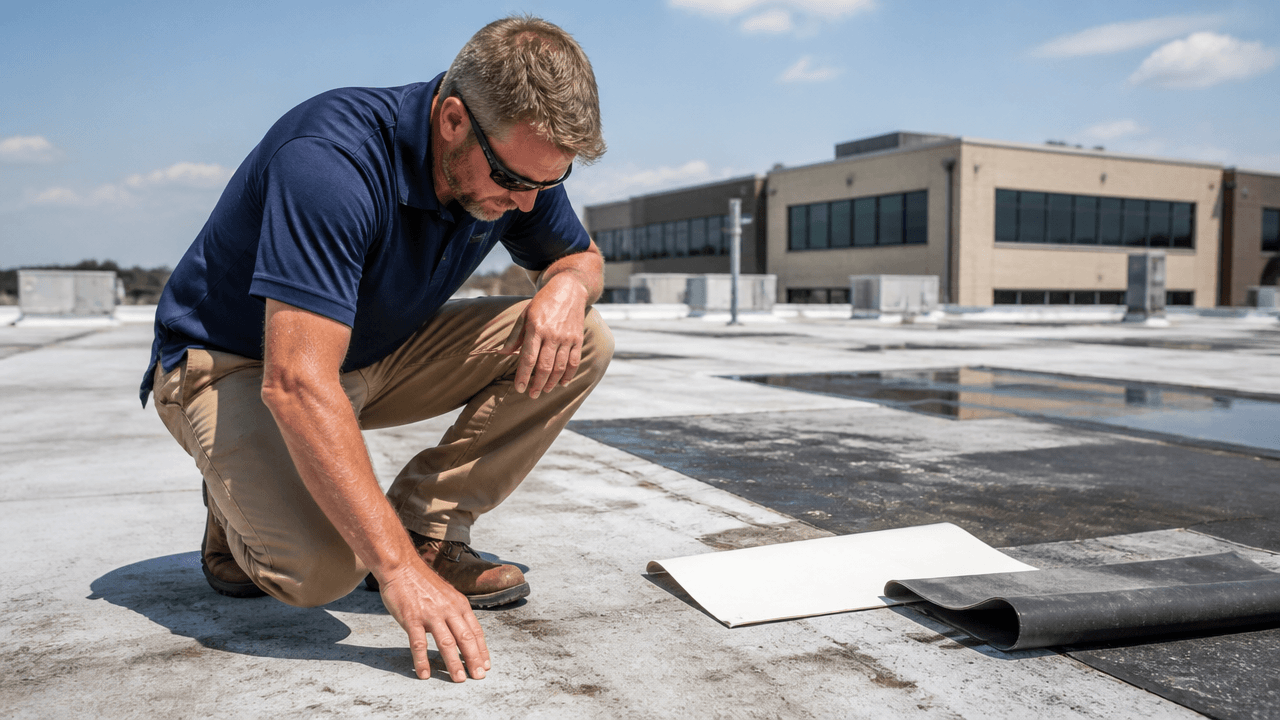
TPO and EPDM are both common flat roof options, but they perform differently in daily use. TPO is often chosen for its lighter color and heat reflection, while EPDM is valued for its rubber-like flexibility and long history on low-slope roofs. When people compare TPO vs EPDM roofing for flat roofs, the best answer usually comes from matching the material to the building’s needs.
Roof age, drainage, and installation quality all matter just as much as the product itself. A flat roof with poor drainage can face trouble even if the material is a good fit on paper. We often remind owners that the roof system works as a whole, not just as a single layer, which is why careful planning matters from the start.
Tips from the Pros
🛠️ Tip 1: Check How Your Roof Handles Heat
In summer, a flat roof can absorb a lot of heat, and that can affect the surface over time. TPO is often used when heat reflection is a priority, which can be useful for buildings that take direct sun for most of the day.
🌧️ Tip 2: Pay Attention to Standing Water
Flat roofs need good drainage because water that sits too long can cause trouble. EPDM is known for flexibility, but no roof material should be expected to handle repeated ponding without issues.
🔍 Tip 3: Look at the Roof Shape First
The slope and layout of the roof should guide the material choice. If water moves slowly across the surface, the right roofing system needs to work with that design instead of fighting it.
📋 Tip 4: Compare Maintenance Needs
Some roofing systems are easier to inspect and patch than others, depending on how they were installed. When weighing TPO vs EPDM roofing for flat roofs, maintenance habits should be part of the decision, not an afterthought.
☀️ Tip 5: Think About Summer Sun Exposure
Strong sunlight can wear on roofing materials over time, especially during long hot stretches. In Lawrence, roofs that get full afternoon sun may need extra attention when choosing between light-reflective and darker surface options.
🧰 Tip 6: Ask About Repair Style
Different materials may call for different repair methods when damage shows up. A roof that can be patched quickly may save time, but the repair must still match the material and the original installation.
🏗️ Tip 7: Match the Material to the Building Use
A warehouse, office, and retail building may all need different roofing support based on traffic, equipment, and access. The best flat roof is the one that fits how the building is actually used every day.
📅 Tip 8: Do Not Wait for a Leak
If a flat roof is aging, waiting for visible damage can make the problem worse. Early inspection helps catch weak seams, surface wear, and drainage problems before they turn into bigger repairs.
Frequently Asked Questions
What is the main difference between TPO and EPDM?
The main difference is how each material handles heat and flexibility. TPO is often chosen for its reflective surface, while EPDM is known for its rubber-like durability and long use on flat roofs.
Which is better for hot summer weather?
TPO is often a strong choice for hot summer weather because its lighter surface can reflect more sunlight. That said, the best option still depends on the roof design, drainage, and the building’s needs.
Is EPDM a good choice for flat roofs?
Yes, EPDM is a good choice for many flat roofs. It is widely used because it stays flexible and has a solid track record on low-slope roofing systems.
How do I know which roof is right for my building?
You should choose based on roof slope, sun exposure, drainage, and building use. When comparing TPO vs EPDM roofing for flat roofs, the right answer is the one that fits your property’s real conditions.
Do flat roofs need regular inspections?
Yes, flat roofs should be inspected regularly. Small issues like seam wear, drainage trouble, or surface damage can turn into bigger repairs if they are not caught early.
Final Thoughts on Flat Roof Choices
Choosing between TPO and EPDM is not just about picking a material, it is about protecting the building for the long run. In a summer season like Lawrence often sees, roof performance can change quickly when heat and storms keep hitting the same surface. We believe the best roofing decisions come from clear facts, careful inspection, and a plan that fits the property.
If your flat roof needs attention, now is the time to act before minor wear becomes a larger issue. The right guidance can help you compare options, understand the risks, and move forward with more peace of mind. To stay connected with our team and see what we are working on, follow us on Facebook.