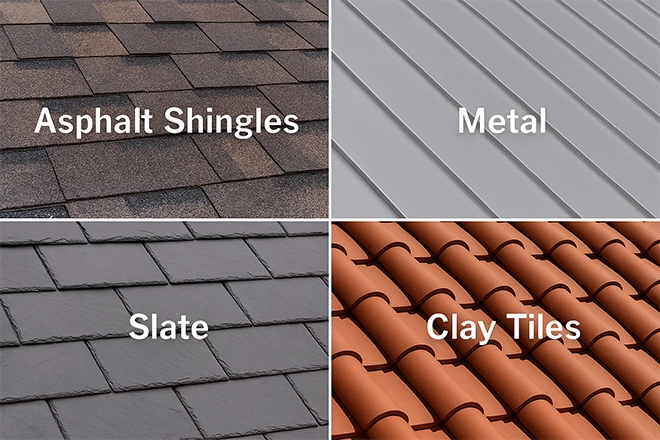
The main types of roofing materials are asphalt shingles, metal, tile, slate, wood, and flat-roof membranes like TPO and EPDM. Asphalt is the most affordable and most common for homes. Metal lasts longest and handles storms well. Tile and slate are premium and last decades. Flat membranes are mostly for commercial and low-slope roofs. The right choice depends on your budget, climate, and how long you plan to stay. Below is a breakdown of each, with a quick comparison table, so you can narrow it down before you talk to a roofer.
How to think about roofing materials
Choosing a roof is not just about looks. The material you pick affects how long the roof lasts, how well it handles wind and hail, your energy bills, and your budget, both now and down the road.
There is no single best option. The right roofing material depends on three things: your budget, your climate (here in the Midwest that means wind, hail, and big temperature swings), and how long you plan to stay in the home. A material that is perfect for a forever home may be overkill if you plan to move in a few years.
Here is a look at the most common types of roofing materials, what each is good at, and where each falls short.
Quick comparison of roofing materials
| Material | Typical lifespan | Relative cost | Best for |
|---|---|---|---|
| Asphalt shingles | 20 to 30 years | $ | Most homes, budget-friendly |
| Metal | 40 to 70 years | $$$ | Longevity, storms, energy savings |
| Clay or concrete tile | 50+ years | $$$$ | Hot climates, long-term homes |
| Slate | 75 to 100+ years | $$$$ | Premium, historic looks |
| Wood shake | 30 to 50 years | $$$ | Natural look (needs upkeep) |
| Synthetic / composite | 40 to 50 years | $$$ | Slate or shake look, less weight |
| Flat membrane (TPO, EPDM) | 20 to 30 years | $$ | Commercial and flat roofs |
Lifespans and costs are general ranges. Actual numbers vary by product, installation, and climate.
Asphalt shingles
Asphalt shingles are by far the most common roofing material on American homes, and for good reason. They are affordable, come in many colors and styles, and almost every roofing crew installs them, so repairs are easy and inexpensive.
There are two main types of roof shingles in this category: basic 3-tab shingles, which are flat and budget-friendly, and architectural (dimensional) shingles, which are thicker, last longer, and look richer. In hail country, you can also get impact-resistant (Class 4) asphalt shingles built to take a hailstone without cracking. The trade-off is lifespan, asphalt does not last as long as metal, tile, or slate, and dark shingles can absorb heat.
For a deeper look at picking the right shingle, see our guide to the best roofing shingles, and if hail is a concern where you live, our guide on whether impact-resistant shingles are worth it.
Metal roofing
Metal roofing has come a long way from the old barn look. Today’s metal roofing materials include standing seam panels with clean hidden fasteners, plus metal shingles and tiles made to mimic asphalt, wood, or slate. Steel and aluminum are the most common choices for homes.
Metal’s biggest strengths are longevity and toughness. It commonly lasts 40 to 70 years, sheds snow, resists fire, and stands up to wind and hail better than most materials. It also reflects heat, which can lower summer cooling bills. The main downsides are a higher upfront cost and the need for an experienced installer. To weigh it against the most common option, read our comparison of metal roof vs shingles.
Tile roofing (clay and concrete)
Clay and concrete tile roofs are known for lasting a very long time, often 50 years or more, and for handling heat well, which is why they are popular in hot, dry climates. They come in many shapes and colors and give a home a distinctive look.
The trade-offs are weight and cost. Tile is heavy, so the home’s structure has to support it, and both the material and installation cost more than asphalt. Individual tiles can also crack under heavy impact, though the roof as a whole lasts decades.
Slate roofing
Slate is the premium, top-tier roofing material. A natural slate roof can last 75 to 100 years or more, resists fire, and gives historic and high-end homes a timeless look that is hard to match.
The catch is price and weight. Slate is one of the most expensive roofing materials, it is very heavy, and it needs specialized installers who know how to work with it. For homeowners who want the slate look without the weight and cost, synthetic slate (covered below) is a popular alternative.
Wood shakes and shingles
Wood shakes and shingles, usually cedar, offer a natural, rustic look that many homeowners love. They can last 30 to 50 years when well maintained and offer decent insulation.
The downside is upkeep. Wood needs regular maintenance to prevent rot, mold, and insect damage, and it can be a concern in fire-prone areas unless treated. It is a beautiful but higher-maintenance choice.
Synthetic and composite roofing
Synthetic roofing materials, such as composite or polymer products, are engineered to mimic the look of slate, shake, or tile while weighing far less and costing less than the real thing. Premium lines like DaVinci Roofscapes are a good example.
These products typically last 40 to 50 years, resist impact and weather well, and are lighter, so they do not require the heavy structural support that real slate or tile does. They are a strong middle-ground option for homeowners who want a high-end look with better durability and lower maintenance.
Flat roof materials (TPO, EPDM, and more)
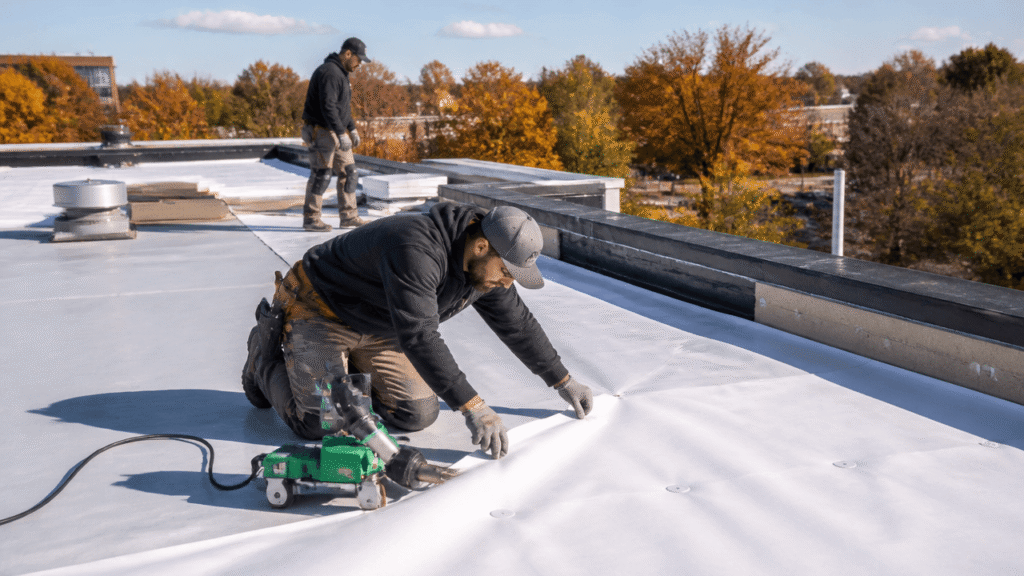
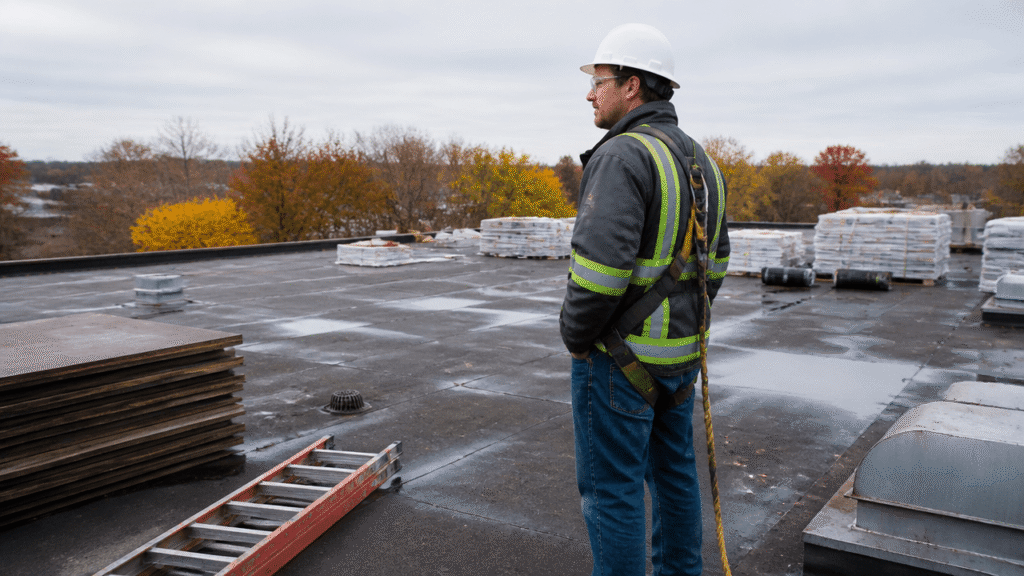
Flat and low-slope roofs, common on commercial buildings, apartments, and some modern homes, use membrane systems rather than shingles. The main flat roof types are TPO and EPDM single-ply membranes, along with built-up roofing (BUR) and modified bitumen. These commercial roof types are chosen for durability, weather resistance, and how well they handle drainage and ponding water.
If you own a commercial or multi-family building, the material choice and installation are different from a typical home, our commercial roofing team handles TPO, EPDM, metal, and other flat-roof systems.
How to choose the right roofing material
With so many types of roofing materials, the decision comes down to matching the material to your situation. Think through:
- Budget, both the upfront cost and the cost over the roof’s life. A cheaper roof you replace twice may cost more than one durable roof.
- Climate, in the Midwest, wind and hail resistance matter, which is why impact-resistant asphalt and metal are popular here.
- How long you will stay, a forever home justifies investing in metal, tile, or slate; a shorter stay may favor quality asphalt.
- Your home’s structure and style, heavy materials like tile and slate need proper structural support, and the material should suit the look of your home.
- Energy efficiency, reflective metal and tile can help with cooling costs.
The best way to decide is to have a professional look at your roof and walk you through the options for your home and budget. Shamrock has installed every major roofing material across the Midwest since 1977, and we are certified by manufacturers including Owens Corning, GAF, CertainTeed, and DaVinci. When it is time for a new roof, our roof replacement team will give you honest recommendations with a clear written estimate, no pressure.
Book a free inspection or call (913) 850-6556 to talk through the right roofing material for your home.
FAQs
What are the most common types of roofing materials?
The most common are asphalt shingles, metal, clay or concrete tile, slate, wood shakes, synthetic composites, and flat-roof membranes like TPO and EPDM. Asphalt shingles are the most popular for homes because they are affordable and versatile.
What is the longest-lasting roofing material?
Slate lasts the longest, often 75 to 100 years or more. Tile and metal also last a long time, commonly 50-plus years for tile and 40 to 70 years for metal. Asphalt shingles last about 20 to 30 years.
What is the most affordable roofing material?
Asphalt shingles are the most affordable, which is why they are on most homes. They offer the best balance of upfront cost, durability, and easy repair for the average homeowner.
Which roofing material is best for the Midwest?
In the storm-prone Midwest, impact-resistant (Class 4) asphalt shingles and metal roofing are popular because both stand up well to wind and hail. The best choice still depends on your budget and how long you plan to stay.
What roofing materials are used on flat roofs?
Flat and low-slope roofs use membrane systems such as TPO, EPDM, built-up roofing (BUR), and modified bitumen. These are most common on commercial and multi-family buildings.