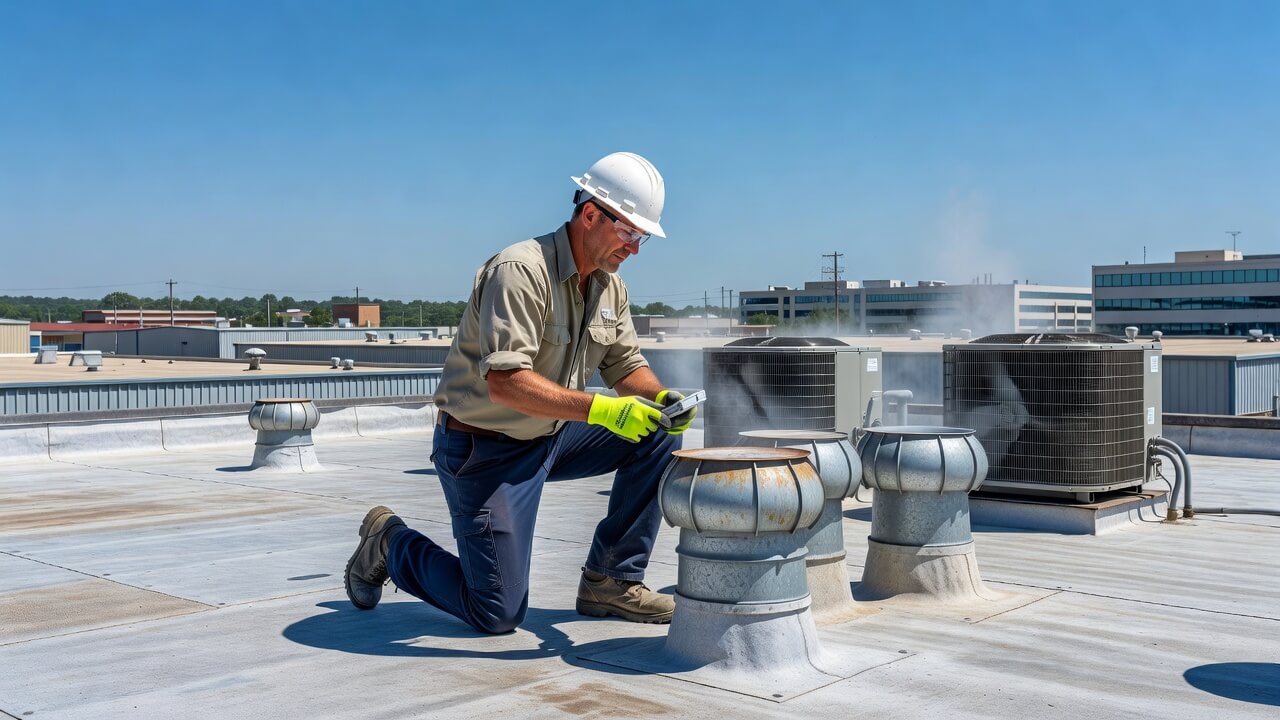
• Commercial roof ventilation helps move hot air out and bring fresh air in, which can reduce heat buildup and moisture problems.
• In Lincoln, NE, summer heat makes roof airflow more important for protecting commercial roofing materials and building comfort.
• A step-by-step check of vents, airflow, moisture signs, and roof design can help spot ventilation problems before they turn costly.
Why Roof Airflow Matters in Summer
When summer heat settles over Lincoln, NE, a commercial roof can start to trap hot air fast. That trapped heat can put extra stress on the roof system and make the building less comfortable inside. When we explain commercial roof ventilation explained, we are really talking about how to keep that heat moving instead of building up.
Poor airflow can also lead to moisture issues when warm, damp air stays inside roof spaces too long. Over time, that moisture can wear down materials and raise the chance of costly repairs. If we act early, we can help protect the roof and keep the building working the way it should.
For businesses, small roof problems can turn into larger ones when they are ignored through the hottest part of the season. That is why it helps to know what to look for before the next heat wave rolls in. If we need support, our team at commercial roofing services can help keep things moving in the right direction.
How Commercial Roof Ventilation Works
A roof ventilation system works by letting hot air out and allowing fresh air in. That steady air movement helps balance temperature and lowers the strain placed on the roof deck and materials. In summer, this becomes even more important because heat can build quickly under a low-slope or larger commercial roof.
We also need to think about moisture control, since ventilation is not only about temperature. When air moves well, it is harder for damp conditions to settle into the roof space and cause long-term damage. That is why commercial roof ventilation explained is not just a roofing topic, but a part of building care that supports daily operations.
Step-by-Step Ventilation Guide
🌡️ Step 1: Check for heat buildup
Start by noticing whether the roof area feels unusually hot during the day. Excess heat can be a sign that air is not moving the way it should, which can affect the roof system over time.
🧭 Step 2: Find intake and exhaust points
Look for where air enters and exits the roof space. A working system needs both paths so warm air can leave and cooler air can replace it.
🔍 Step 3: Inspect for blocked airflow
Check for dirt, debris, or damaged parts that may slow air movement. Blocked vents can trap heat and moisture, which can lead to early wear.
🧱 Step 4: Look for moisture signs
Watch for staining, damp areas, or material changes near the roof space. Moisture problems often point to weak airflow and should be taken seriously.
🛠️ Step 5: Review insulation balance
Make sure insulation is not stopping air from moving where it needs to go. Good insulation and good ventilation should work together, not against each other.
📐 Step 6: Match the system to the roof type
Different commercial roofs need different airflow setups. The design should fit the size, shape, and use of the building so the system works as intended.
⏱️ Step 7: Recheck during hot weather
Summer conditions can reveal problems that are easy to miss in cooler weather. A second look during peak heat can show whether the ventilation is keeping up.
👷 Step 8: Bring in a roofing pro when needed
If the roof still traps heat or shows signs of moisture, the system may need a closer review. A trained team can check the setup and recommend the right next move.
Common DIY Mistakes to Avoid
Trying to handle roof airflow on your own can seem simple at first, but small errors often create bigger issues. Many of these mistakes happen when people focus only on what they can see and miss how the whole system works. Knowing these risks can save time, money, and stress.
- ⚠️ Mistake 1: Ignoring hidden airflow paths
This happens when someone checks only the visible roof area and misses intake or exhaust points that are tucked away. It usually comes from rushing the job or not knowing how the system moves air, so the fix is to inspect the full path before making changes. - ⚠️ Mistake 2: Blocking vents with debris
This is a common problem when dust, leaves, or other material gets left in place during a quick cleanup. It can be prevented by clearing all openings carefully and making sure nothing is limiting the airflow. - ⚠️ Mistake 3: Treating moisture as a small issue
Some people see a little dampness and assume it will dry out on its own, but that can allow damage to spread. The best prevention is to treat moisture as a warning sign and check whether the ventilation is doing its job. - ⚠️ Mistake 4: Overlooking roof design
Not every commercial roof needs the same setup, and one-size-fits-all fixes often fall short. This mistake usually happens when someone copies a solution from another building, so the safer choice is to match the system to the roof type. - ⚠️ Mistake 5: Waiting until damage gets worse
People often delay action because the roof still seems usable, even though the signs are already there. That delay can be avoided by checking the system early and getting help before the heat causes more wear.
Frequently Asked Questions
What does commercial roof ventilation do?
Yes, commercial roof ventilation helps move hot air out and bring fresh air in. This can reduce heat buildup and lower the chance of moisture problems inside the roof system.
Why is roof ventilation important in summer?
Yes, roof ventilation is especially important in summer because heat builds up faster during long hot days. That extra heat can strain roofing materials and make the building harder to cool.
How do I know if my commercial roof has poor ventilation?
Yes, there are clear signs of poor ventilation, including trapped heat, damp spots, and early wear on roofing materials. If the roof space feels unusually hot or shows moisture marks, the system may need attention.
Can poor ventilation damage a commercial roof?
Yes, poor ventilation can damage a commercial roof over time. Heat and moisture together can weaken materials and lead to repair needs that could have been avoided earlier.
How often should commercial roof ventilation be checked?
Yes, commercial roof ventilation should be checked regularly, especially before and during hot weather. A seasonal review helps catch problems before they become bigger and more expensive.
Keeping Your Roof Ready for Heat
A roof that moves air well is better prepared for summer stress and daily use. When we understand the signs, follow the right steps, and avoid common mistakes, we give the building a better chance to stay in good shape. That is the value of commercial roof ventilation explained in simple terms.
If we stay ahead of heat and moisture problems, we can protect both the roof and the business inside it. A careful review now can prevent bigger trouble later and keep the system working as expected. To stay connected with our team, feel free to follow us on social media.