Updated June 09, 2026
Your roof is the most important protective layer on your home, and a little regular maintenance is the cheapest way to make it last. Routine upkeep catches small problems before they turn into leaks, rot, or an early replacement, and it can add years to your roof’s life.
This guide covers what roof maintenance actually involves, a season-by-season checklist you can follow, how often to inspect, and when a job is better left to a professional. Shamrock has maintained and repaired roofs across the storm-prone Midwest since 1977, so this is the same approach we walk our own customers through.
Why roof maintenance matters
- It saves money. A small repair caught early costs a fraction of what water damage, deck rot, or a premature replacement will.
- It extends roof life. Well-maintained asphalt roofs reliably reach their full 25–30 year lifespan; neglected ones don’t.
- It protects your warranty. Many manufacturer and workmanship warranties require regular maintenance and inspections to stay valid.
- It prevents leaks and interior damage. Most interior water damage traces back to a small roof issue that went unnoticed.
How often should you inspect your roof?
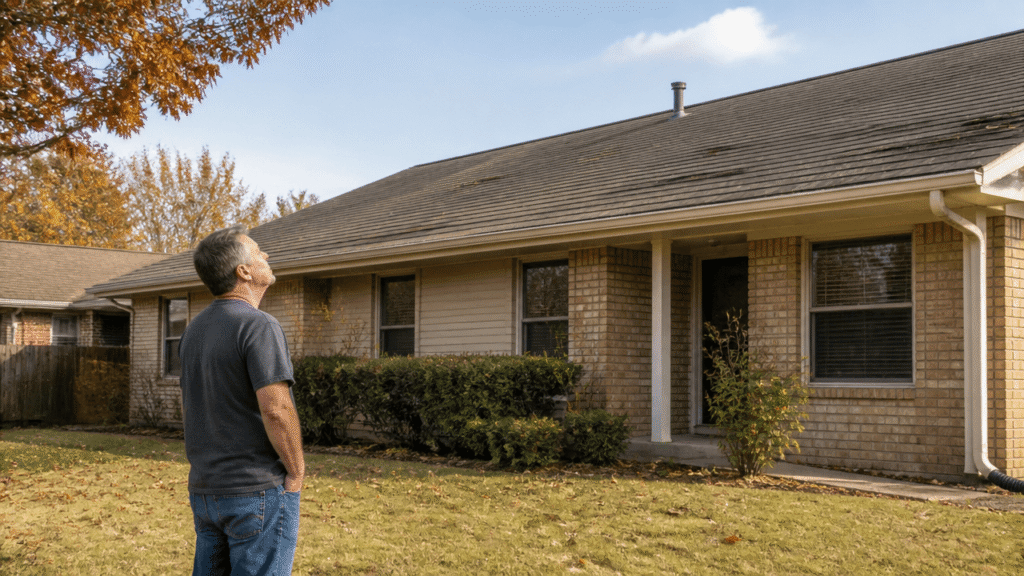
For most homes, inspect your roof twice a year, in spring and fall, plus after any major storm. In the Midwest, that post-storm check matters most: hail and high winds cause damage that often isn’t visible from the ground and may not leak right away.
A quick rule of thumb: the older your roof, the more often it’s worth a professional look. Once a roof passes 15 years, an annual professional inspection is smart insurance.
Your seasonal roof maintenance checklist
You can do much of this from the ground with binoculars or from a stable ladder. Don’t walk on the roof unless you’re trained and equipped, that’s where most homeowner injuries happen.
Spring
- Look for shingles that are cracked, curling, loose, or missing after winter
- Check for granule loss (bald spots on shingles, or granules collecting in gutters)
- Clear gutters and downspouts of debris and confirm they drain freely
- Inspect flashing around chimneys, vents, and skylights for gaps or rust
- Check the attic for damp insulation, water stains, or daylight coming through
Summer
- Look for blistering or signs of heat and moisture damage
- Trim tree branches hanging over or touching the roof
- Check attic ventilation, poor airflow cooks shingles from below and shortens their life
- Watch for algae streaks or moss, especially on shaded slopes
Fall
- Clean gutters again after leaves drop, this is the big one before winter
- Re-check flashing and seals before freeze-thaw season
- Look for any loose or lifted shingles that winter wind could tear off
- Make sure downspouts carry water well away from the foundation
Winter
- Watch for ice dams along the eaves (a ventilation/insulation warning sign)
- Safely rake heavy snow off the lower roof edge if it’s piling up
- Check the attic after storms for leaks or condensation
- Note any interior ceiling stains and have them inspected promptly
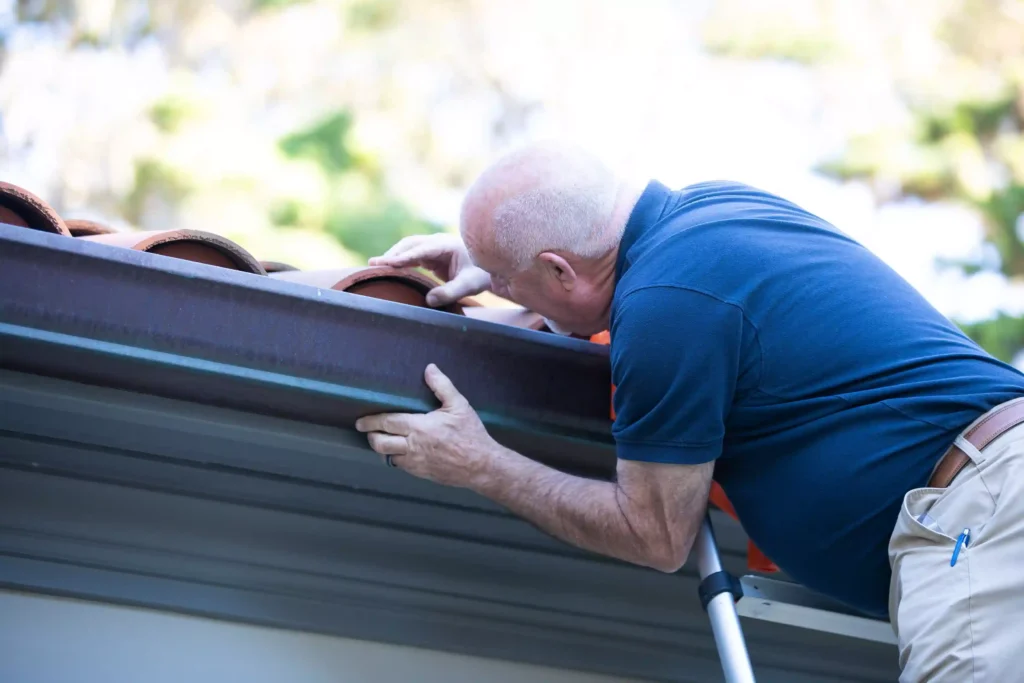
Want a printable version? Save or print this checklist and keep it with your home records, then set a reminder for spring and fall.
Roof maintenance by material
Different roofs need slightly different care:
- Asphalt shingles — watch for granule loss, curling, and missing shingles; keep gutters clear and ventilation healthy.
- Metal roofs — check fasteners and seams, clear debris from valleys, and watch for scratched coatings that can rust. (Metal roof maintenance is low but not zero.)
- Flat / low-slope roofs — common on commercial and multi-family buildings; check for ponding water, membrane seams, and clogged drains regularly.
- Tile and slate — inspect for cracked or slipped tiles and damaged underlayment; avoid walking on them.
Roof maintenance for multi-family and commercial buildings
If you own or manage apartments, condos, or commercial property, roof upkeep is a bigger job, and the stakes are higher. A few things make multi-family and commercial roofs different:
- Scale and scheduling. Larger or multiple roof sections mean inspections multiply; a contractor can set a rotating schedule so nothing gets missed.
- Mixed materials and ages. Buildings expanded over time often have sections of different ages and materials that age at different rates and need tracking.
- Tenant disruption. Repairs affect multiple units and shared walls, so the work needs planning to minimize noise and disturbance.
- Flat-roof specifics. Most commercial and multi-family roofs are flat or low-slope, so drainage, ponding, and membrane condition are the priorities.
For these properties, a professional commercial roofing partner who can standardize inspections and handle multiple units is worth it. Shamrock handles full maintenance, repair, and restoration for apartments, condos, townhomes, and duplexes.
DIY vs. hiring a professional
Plenty of roof maintenance is homeowner-friendly: clearing gutters, trimming branches, watching for visible damage, and checking the attic. But call a professional when:
- Your roof is steep, tall, or multi-story (the fall risk isn’t worth it)
- You see leaks, sagging, widespread granule loss, or daylight in the attic
- A storm just came through and you need a real damage assessment
- Your roof is older and due for a thorough professional inspection
- You want to protect a warranty that requires documented inspections
A professional also catches what an untrained eye misses, and a roofer up there for maintenance often spots early storm or age damage before it becomes a leak.
Let Shamrock check your roof
The easiest maintenance step of all: let a professional take a look. Shamrock offers free roof inspections, and we’ll tell you honestly whether your roof just needs minor upkeep, a small repair, or something more.
Explore our roof repair and roof replacement services, or call (913) 850-6556 to schedule. No pressure, just a clear picture of what your roof needs.
Frequently asked questions
How often should a roof be inspected?
Twice a year, in spring and fall, and after any major storm. Roofs older than 15 years benefit from an annual professional inspection.
What does roof maintenance include?
Inspecting shingles and flashing, clearing gutters and downspouts, checking attic ventilation and for leaks, trimming overhanging branches, and addressing minor damage before it spreads.
Can I do roof maintenance myself?
Some of it, yes, gutter cleaning, branch trimming, and ground-level visual checks. Leave roof-walking, repairs, and post-storm assessments to a professional for safety and warranty reasons.
How much does a roof inspection cost?
Many roofing companies, including Shamrock, offer free inspections. Paid standalone inspections typically range from about $100–$300 depending on roof size and complexity.
Does roof maintenance affect my warranty?
Often yes. Many manufacturer and workmanship warranties require regular maintenance and documented inspections to remain valid, so keeping records matters.