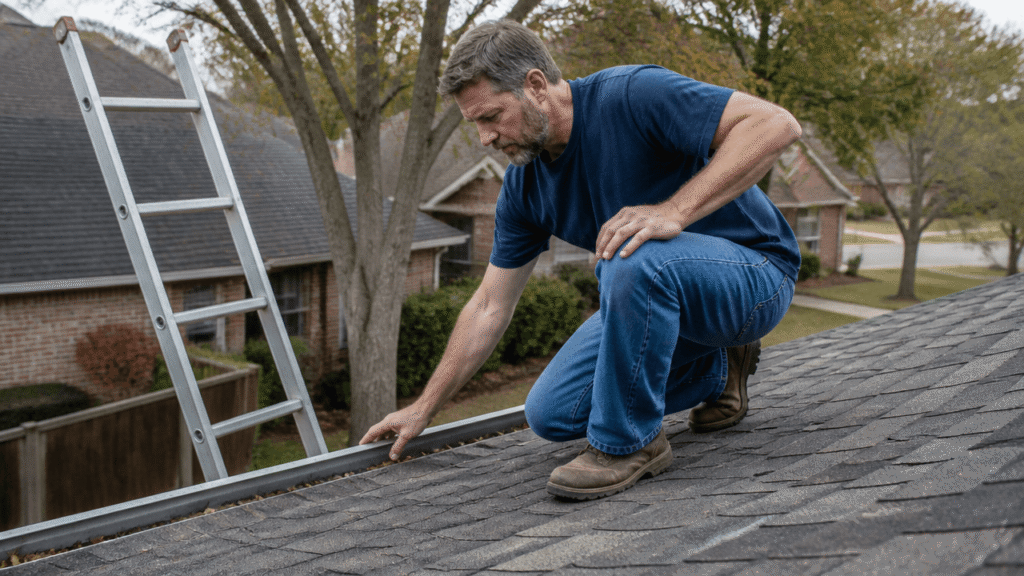
The clearest signs you need a new roof are an age past 20 to 25 years, widespread curling, cracked, or missing shingles, frequent leaks or water stains, heavy granule loss, sagging, and daylight in the attic. One small problem usually means a repair, not a replacement. But several signs together, or any sign on an older roof, point to replacement. A professional inspection tells you for sure.
How do you know when it’s time for a new roof?
Your roof rarely fails all at once. It gives you warning signs first, and catching them early can save you from interior water damage, mold, and a much bigger bill. The tricky part is telling the difference between a roof that needs a simple repair and one that is genuinely worn out.
Here are the signs that point to a full replacement, what each one means, and when it is time to call a professional.
8 signs you need a new roof
1. Your roof is old
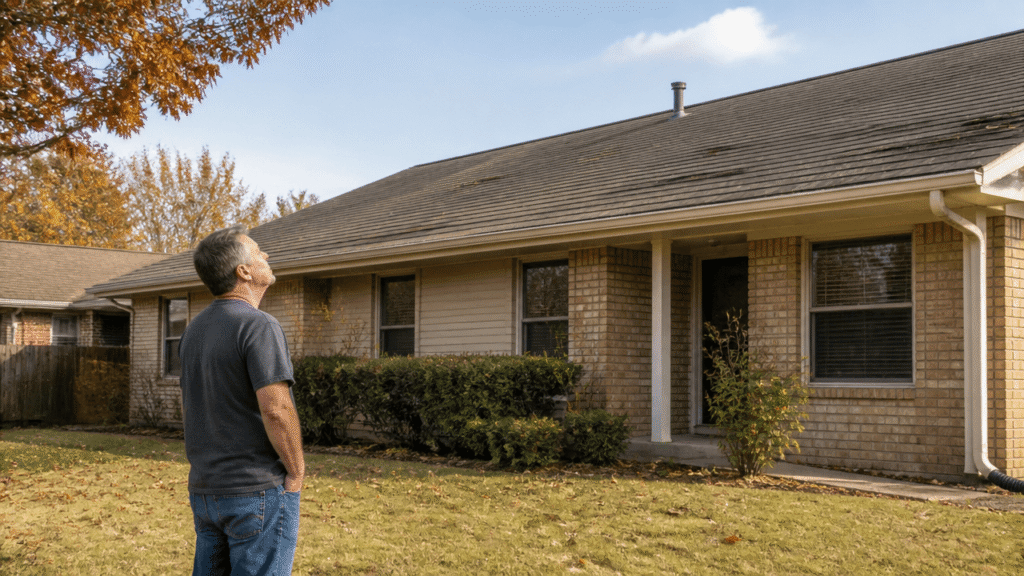
Age is the first thing to consider. Most asphalt shingle roofs last 20 to 30 years. If yours is in that range or older, even if it looks okay from the ground, it is worth a professional look. An aging roof is more likely to fail in the next big storm. (Not sure how old yours should last? See our guide on how long a roof lasts.)
2. Curling, cracked, or buckling shingles
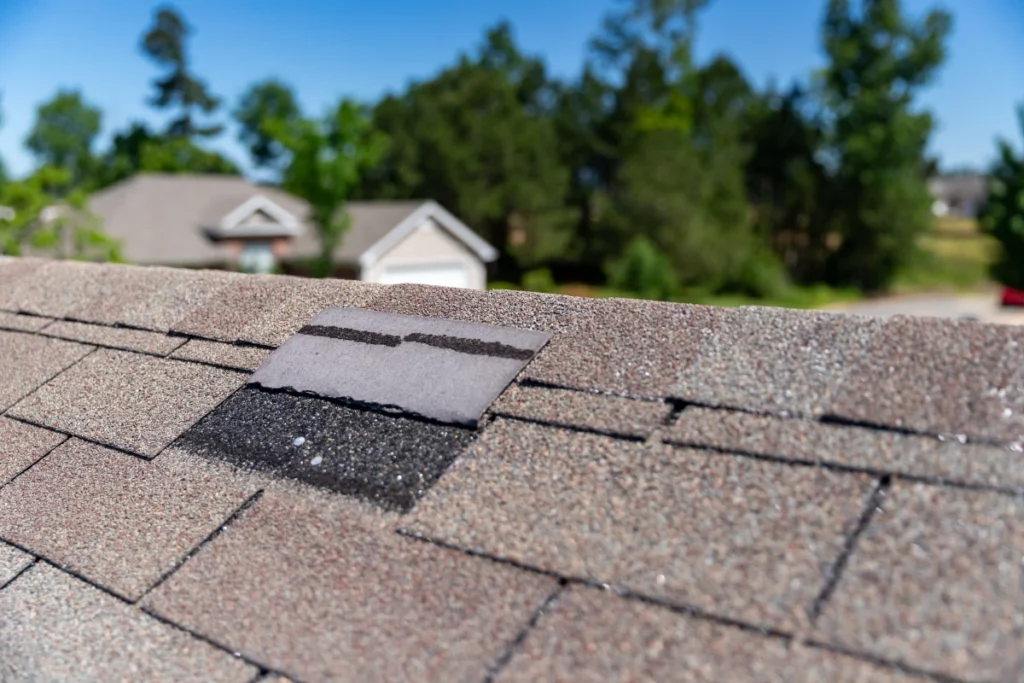
Shingles that are curling at the edges, cracking, or buckling have lost their ability to protect your home. A few damaged shingles can be replaced, but when it is widespread across the roof, it is a strong sign the roof is near the end of its life.
3. Missing shingles
Shingles that have blown off or gone missing leave your roof deck exposed to water. The odd missing shingle after a storm can be repaired, but bald patches in multiple areas usually mean the roof is failing.
4. Granules in the gutters
Asphalt shingles are coated in protective granules. As a roof ages, it sheds them, and they collect in your gutters and downspouts. A lot of granule loss, along with bald, shiny spots on the shingles, means the shingles are wearing out.
5. Leaks and water stains
Water stains on your ceilings or walls, or active drips, mean water is getting past your roof. A single leak around a vent or flashing may be repairable, but repeated leaks or leaks in multiple spots point to a roof that can no longer keep water out.
6. A sagging roofline
A roof that sags or dips is a serious warning sign. It can mean trapped moisture has weakened the decking or, worse, a structural problem underneath. A sagging roof needs a professional inspection right away.
7. Daylight or moisture in the attic
Head into your attic on a bright day. If you can see daylight coming through the roof boards, or you find damp insulation, water stains, or signs of mold, water and air are getting in where they should not. That often signals a roof at the end of its service life.
8. Storm or hail damage
After a major storm, hail and wind can cause damage that is not always visible from the ground. Widespread hail bruising, cracked shingles, and dented metal across the roof can be enough to justify a full replacement, often with insurance help. When in doubt after a storm, get it inspected.
Do you need a repair or a full replacement?
Seeing one sign does not automatically mean you need a new roof. Here is the simple way to think about it:
- A repair usually makes sense when the problem is isolated (one leak, a few missing shingles), the roof is relatively young, and the rest of the roof is in good shape.
- A replacement usually makes sense when problems are widespread, the roof is near or past its expected lifespan, you are dealing with repeated repairs, or there is sagging or structural concern.
If you find yourself paying for repairs over and over on an older roof, replacement is often the more cost-effective choice. Our guide on what drives roof replacement cost can help you plan, and our roof repair page covers the smaller fixes.
When to call a professional
Some signs you can spot yourself from the ground or attic. But a few warrant a call right away: a sagging roofline, active leaks, widespread missing shingles, or major storm damage. And honestly, the most reliable way to know whether you need a new roof is to have a professional look, because a lot of damage is not visible from the ground.
Shamrock has inspected and replaced roofs across the Midwest since 1977. We will give you an honest assessment of whether your roof needs a repair, a replacement, or just some maintenance, with no pressure and no scare tactics. If you do need a new roof, our roof replacement team will walk you through your options.
Book your free roof inspection or call (913) 850-6556.
FAQs
What are the signs you need a new roof?
The main signs are an age past 20 to 25 years, widespread curling, cracked, or missing shingles, repeated leaks or water stains, heavy granule loss in the gutters, a sagging roofline, and daylight or moisture in the attic. Several signs together usually mean replacement.
Can I just repair my roof instead of replacing it?
Often, yes, if the damage is isolated and the roof is otherwise in good shape and not too old. Repairs make less sense on an older roof with widespread problems, where replacement is usually more cost-effective over time.
How do I know if my roof has storm damage?
Look for missing or cracked shingles, dented gutters and vents, and granules in the gutters after a storm. Much hail and wind damage is not visible from the ground, so a professional inspection after a major storm is the safest way to confirm.
Does a sagging roof mean I need a new roof?
A sagging roofline is a serious sign that should be inspected right away. It can mean moisture has damaged the decking or there is a structural issue, both of which often point to replacement.
How long does a roof last before it needs replacing?
Most asphalt shingle roofs last 20 to 30 years. Metal, tile, and slate last longer. Once a roof nears the end of its expected lifespan, watch closely for the warning signs above.