• TPO vs EPDM roofing for flat roofs is an important choice for property owners in Liberty, MO, especially during winter when leaks and weak seams can show up fast. The right roof depends on drainage, age, weather exposure, and how the building is used.
• TPO and EPDM each have strengths, but they work differently in cold weather, sunlight, and moisture. Knowing how each system performs can help you avoid costly repairs and make a smarter roofing decision.
• This guide shares practical tips, common questions, and clear advice to help you compare flat roof options with confidence. It is built to help you spot warning signs early and understand when repair or replacement may be the better path.
Why Flat Roof Choice Matters in Winter
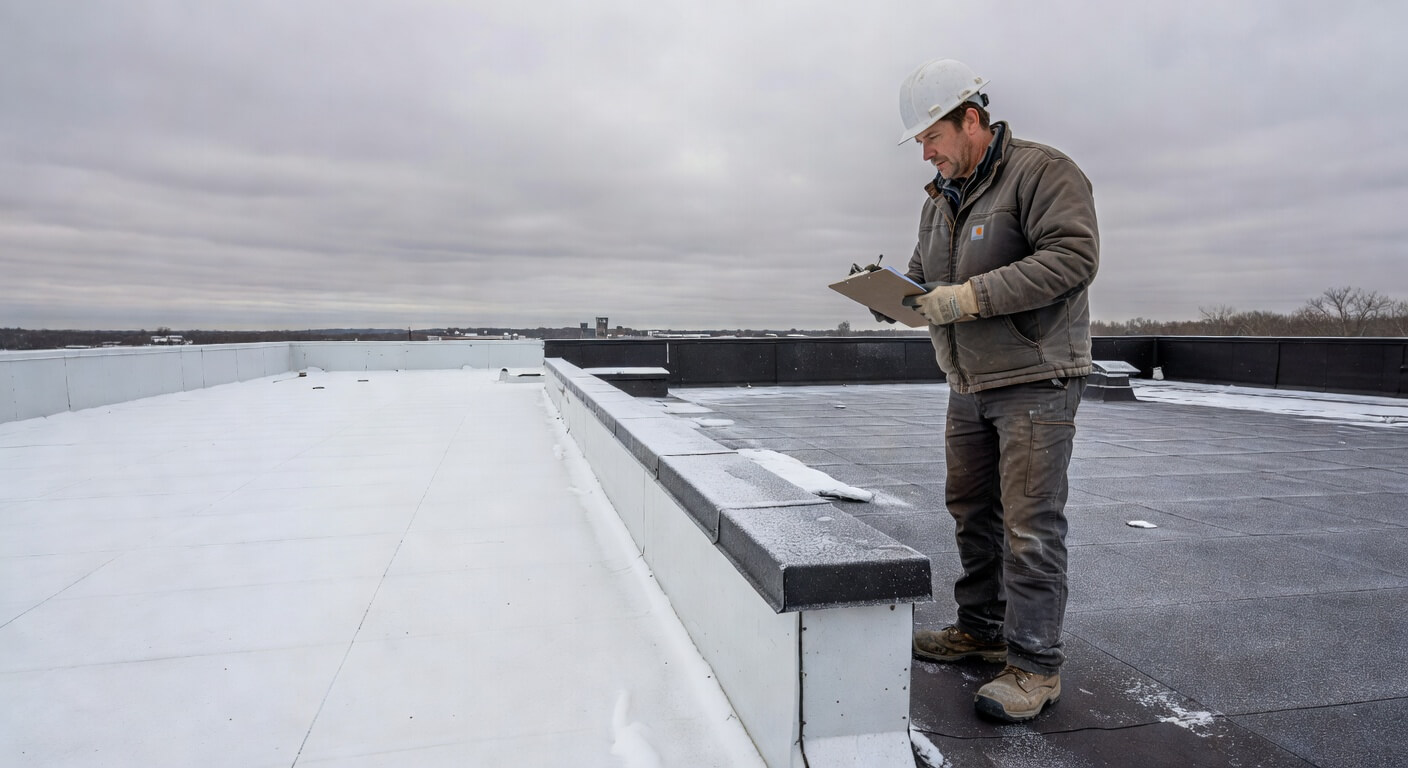
When cold weather settles into Liberty, MO, flat roofs need extra attention. Small problems can turn into bigger issues fast when snow, ice, and freezing rain sit on the roof surface. That is why it helps to understand TPO vs EPDM roofing for flat roofs before damage starts showing up.
Choosing the right system is not just about price. It is also about how the roof handles cold snaps, sunlight, and standing moisture through the season. For business owners and property managers, waiting too long can lead to leaks, stress, and higher repair costs.
If your flat roof is aging or showing wear, winter is a tough time to ignore it. A roofing plan that works in warmer weather may not always hold up the same way in February. We often help property owners compare options like commercial roofing services so they can make a better call before small concerns grow.
How TPO and EPDM Compare
TPO and EPDM are both common choices for flat roofs, but they do not perform the same way in every setting. TPO is a reflective single-ply material that can help reduce heat gain, while EPDM is a rubber roofing system known for its long track record. In cold Missouri weather, both can work well when installed and maintained the right way.
The best choice often depends on the roof’s age, slope, drainage, and overall condition. TPO vs EPDM roofing for flat roofs is not a one-size-fits-all answer, especially when winter weather is part of the decision. We always look at how the roof sheds water, how seams are holding up, and whether repairs are still practical before recommending a next step.
Tips from the Pros
🧊 Tip 1: Check for Winter Stress Points
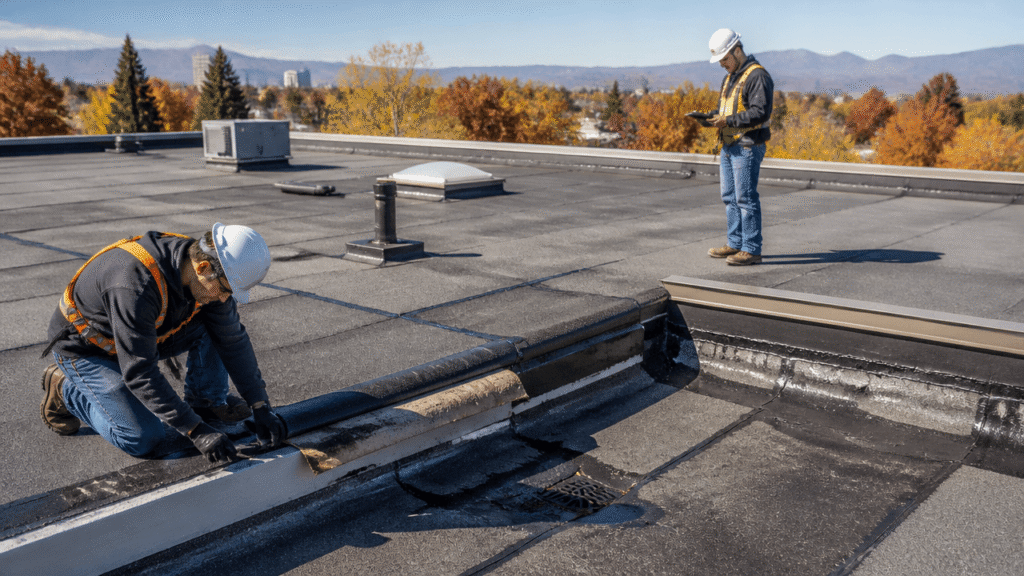
Cold weather can make weak seams, open edges, and older flashing stand out fast. Look for signs of ponding water, brittle spots, or lifted areas after a freeze-thaw cycle.
🌧️ Tip 2: Watch How Water Moves
Flat roofs depend on good drainage to stay in shape. If water sits in the same place after snow melts, that area needs attention before it starts causing leaks.
🔎 Tip 3: Inspect Seams Carefully
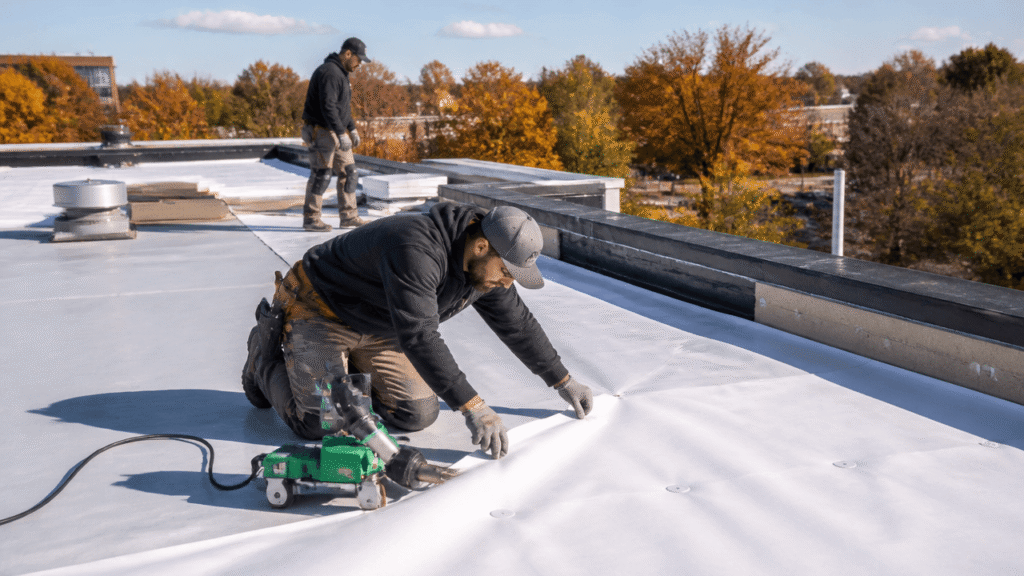
Seams are often where flat roof problems begin. TPO seams are heat-welded, while EPDM seams rely on adhesive and tape systems, so both need regular checks.
🛠️ Tip 4: Look at the Roof Age
Roof age matters when comparing TPO vs EPDM roofing for flat roofs. Older systems may need repairs more often, and the cost of patching can rise when wear spreads across the surface.
☀️ Tip 5: Think About Sun Exposure
TPO reflects more sunlight, which can help during bright, hot seasons. EPDM absorbs more heat, but it has a strong history of holding up well when installed and cared for correctly.
🧰 Tip 6: Match the Material to the Building
A warehouse, office, and retail space may all have different roof needs. The right choice depends on how the building is used, how often traffic reaches the roof, and what the roof must handle year-round.
📋 Tip 7: Keep a Simple Roof Record
Write down repairs, inspections, and any leak spots you notice. A short record helps you spot patterns and makes it easier to know when repair is no longer the best option.
❄️ Tip 8: Plan Repairs Before the Next Storm
Winter weather can move in quickly, and roof issues do not wait for a better day. If you notice damage early, taking action now can help avoid a much larger problem later.
Frequently Asked Questions
What is the main difference between TPO and EPDM roofing for flat roofs?
The main difference is the material and how it handles heat and seams. TPO is a reflective single-ply roof system, while EPDM is a rubber roof material that has been used on flat roofs for many years.
Which is better for winter weather in Missouri?
Both can perform well in Missouri winters when installed correctly. The better choice depends on the roof’s condition, drainage, and how much wear the building already has.
Does TPO vs EPDM roofing for flat roofs matter more on older buildings?
Yes, it matters more on older buildings because the roof’s current condition affects the result. An older flat roof may need repairs, reinforcement, or replacement before either material will perform as expected.
Can either roof type help with energy use?
Yes, both can support energy goals in different ways. TPO reflects more sunlight, while EPDM can still be a strong option when the roof system is built and maintained well.
How do I know when it is time to replace a flat roof?
It is time to consider replacement when leaks keep returning, seams are failing, or repairs no longer hold up. A roof that shows ongoing wear across large areas is usually a better candidate for replacement than repeated patching.
Wrapping Up the Right Roofing Choice
Choosing between TPO vs EPDM roofing for flat roofs takes more than a quick look at cost. In Liberty, MO, winter weather makes it even more important to think about drainage, seams, age, and overall roof condition. The right answer is the one that fits the building and holds up in real-world weather.
If you are unsure which system makes the most sense for your property, we are here to help you sort through the details. A smart roofing choice now can save stress later and help protect your building through the season. To stay connected with our team, follow us on Facebook.